«On the fifth year of full-scale war, 71% of Ukrainians continue to regularly consume Russian-language content, and nearly a quarter of them do so daily. These data were presented by the Vice Prime Minister for Humanitarian Policy, Minister of Culture of Ukraine Tetiana Berezhna during the presentation of the study «How to Reduce the Influence of Russian Content in Ukraine?». This news recently «exploded» Ukrainian social media and public opinion, only to quickly disappear from public attention, replaced by other no less «explosive» headlines. Against this backdrop, the announcement that 2026 in Ukraine will be declared the Year of National Identity passed almost unnoticed».
It is encouraging that in the 12th year of an existential war for independence, Ukraine is finally beginning to speak openly about national identity and culture as foundational factors of national security. But is it not time to move from discussion to systematic and, most importantly, effective action? The figures cited at the beginning of this text objectively show that simply «cancelling» the culture of the aggressor state, or formal measures such as disconnected-from-reality patriotic education lessons in schools, do not lead to meaningful shifts in public consciousness. Meanwhile, the efforts of activists, independent initiatives, and enthusiasts remain a «drop in the ocean», with insufficient impact.
Of course, these efforts are better than nothing, and changes in public consciousness do not happen within a few years. However, for real change to occur, systematic and persistent work is needed at the level of the state and society. This work certainly cannot look like yet another order from the Ministry of Education and Science on “strengthening identity,” nor like, forgive the expression, a one-time distribution of funds by the Ministry of Culture for Ukrainian content production. Because for those funds not to be wasted, the creators of such content must themselves be formed bearers of this desired identity, and also be understandable and acceptable to a broad audience, which, as shown in the first line of this article, is already consuming very different content.
So what should be done and where should we start? In my view, one of the systemic solutions could be the introduction of heritage pedagogy into both formal and non-formal education, starting from preschool, in every community.
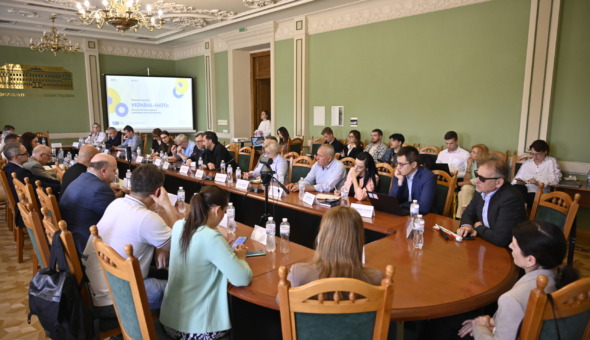
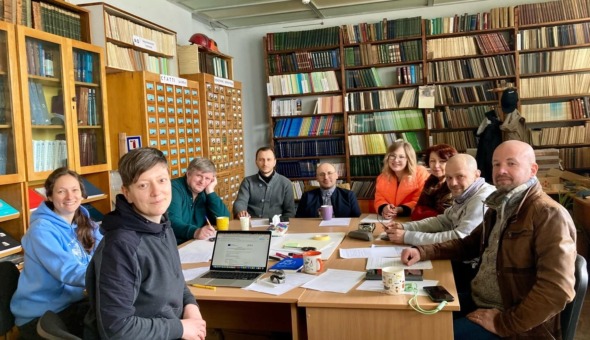
This was among the key topics discussed at a recent meeting of the Network for the Protection of National Heritage ANTS, dedicated to cross-sectoral cooperation between education and cultural institutions.
Heritage pedagogy is an educational approach in which heritage is seen as a resource for learning, upbringing, and connecting schools with communities and local environments. It combines work with local sites, cultural memory, interdisciplinarity, and the civic dimension of education.
Simply put, heritage pedagogy teaches children through what surrounds them: local history, monuments, museum collections, family memories, traditions, crafts, natural landscapes, and even the buildings people live in.
For example, in France, heritage pedagogy is integrated into school curricula through museums, cultural routes, and interdisciplinary projects. Heritage is studied not only in history or art lessons. It is also incorporated into geography, civic education, and project-based learning, where students explore their town or village, work with sources, take part in exhibitions, and meet local tradition bearers.
Heritage pedagogy is almost always interdisciplinary and integrated into community life. In UNESCO materials on «living heritage», it is emphasized that learning about living heritage is effective when schools combine different disciplines and students do not simply read about tradition but explore it through practice.
For example, in primary school, children collect family stories, work with everyday objects, and study local holidays. In middle school, they research the architecture of their city, the history of a street or craft, record oral testimonies of older residents, and create digital memory maps. In high school, they conduct interdisciplinary studies of regional heritage, compare cultural traditions across regions, and prepare school exhibitions or podcasts.
UNESCO also explicitly states that heritage pedagogy contributes to the resilience of communities. Living heritage is a source of identity, wellbeing, and cohesion, and in education it fosters a sense of belonging and continuity in children. For a country experiencing war, loss, and forced displacement, this is not an abstract idea. If a child studies not only «big dates» but also the history of their home, the crafts of their region or the region where they temporarily live, family stories, traditional building methods, or local cuisine, they gain more than knowledge. They gain grounding.
Fortunately, it cannot be said that no one is doing this in Ukraine. Elements of heritage pedagogy can be found in the New Ukrainian School reform. In recent years, 12 Ukrainian schools participated in the pilot UNESCO project «Teaching and learning with living heritage in Ukraine», where teachers and students integrated living heritage into school subjects, including mathematics, physics, and literature. One example is work with the tradition of the mazanka (traditional clay house): children not only learn about traditional housing but also build models, measure thermal conductivity of materials, study chemical mixtures for whitewashing, and even take part in restoring real objects together with the community.
However, at present, all of this is driven exclusively by individual enthusiasts rather than being part of a consistent and conscious state policy. What exists within the New Ukrainian School, such as work with cultural memory, local environment, and national tradition, functions more as optional resources that a teacher may or may not use within thematic units, integrated courses, and projects. This is clearly illustrated by a fact shared at the mentioned meeting of the Network for the Protection of National Heritage by Ms. Nataliia Petrova from Odesa I.I. Mechnikov National University: among supervisors of student ethnology research conducted within the Junior Academy of Sciences of Ukraine (JASU), there is not a single history teacher. Instead, these are IT teachers, biology teachers, mathematics teachers, and educational coordinators, in other words, the same solitary practitioners who are exceptions rather than the norm.
Until the formation of awareness of cultural and natural heritage as a national asset and an important component of every citizen’s self-perception becomes one of the key goals of the education system, we risk remaining with polished strategies, high-level discussions, and a «population» rather than citizens who, for the sake of short-term benefit, vote for construction on protected land, passively watch the destruction of historic buildings on their own streets, remain indifferent to the closure of libraries and community clubs, and listen to Russian pop music.
Therefore, if we truly want to shape Ukrainian national identity, the development of heritage pedagogy in Ukraine must not be reduced to isolated actions or «memory weeks».
A full-fledged policy is needed:
- introduction of a «heritage pedagogy» discipline into teacher and educator training programs
- full integration of heritage pedagogy into the educational process
- partnerships with communities and cultural institutions. In France, for example, cooperation between the Ministries of Education and Culture in the field of heritage pedagogy is formalized through educational pathways and structured collaboration between schools and cultural institutions.
This is not an easy or quick path. However, first, we will not be pioneers on it. Our European partners, especially France and Poland, have extensive experience and are unlikely to refuse methodological and practical support. Second, the implementation of heritage pedagogy aligns with EU recommendations for reforms in the humanitarian sector, as it significantly strengthens cross-sectoral cooperation at the ministerial level and participatory practices in education and culture at the community level. Third, now, while school reform is ongoing, there is an opportunity to organically integrate heritage pedagogy into it without additional stress for participants.
As we can see, the first steps have already been taken, and there is growing professional understanding of the need for a shift in approach. The key is to keep moving forward.
Nataliia Skliarska,
coordinator of the project «National Heritage Protection Network»
___________________________________________________________________________
-
https://ich.unesco.org/en/news/teaching-and-learning-with-living-heritage-in-ukraine-13461
-
https://lib.iitta.gov.ua/id/eprint/728245/1/Гораш_Кузьменко_тези_2021.pdf
-
https://www.erudit.org/en/journals/rse/2017-v43-n1-rse03267/1042075ar.pdf
-
https://openscience.fr/What-is-the-integration-of-local-heritage-in-french-education
-
https://evnuir.vnu.edu.ua/bitstream/123456789/16376/1/32-39.pdf
-
http://www.innovpedagogy.od.ua/archives/2024/78/part_2/6.pdf
-
https://www.unesco.org/en/articles/teaching-and-learning-living-heritage-ukraine
- https://library.oapen.org/bitstream/handle/20.500.12657/85915/1/122.pdf