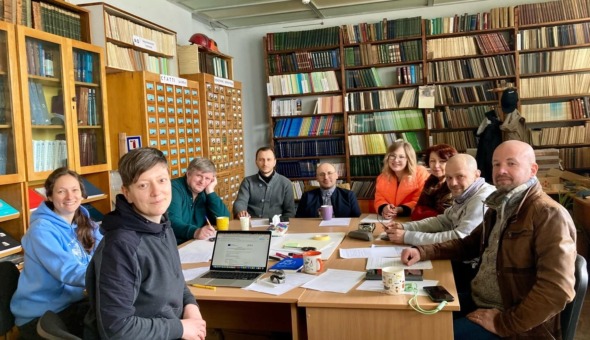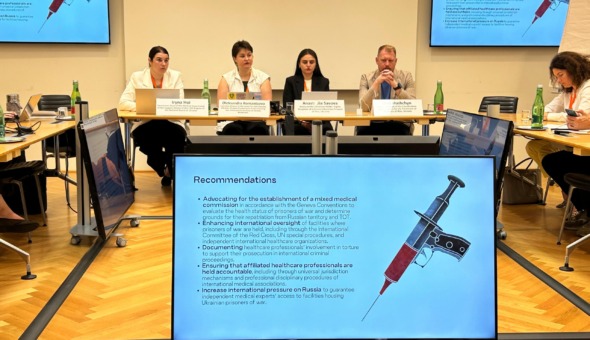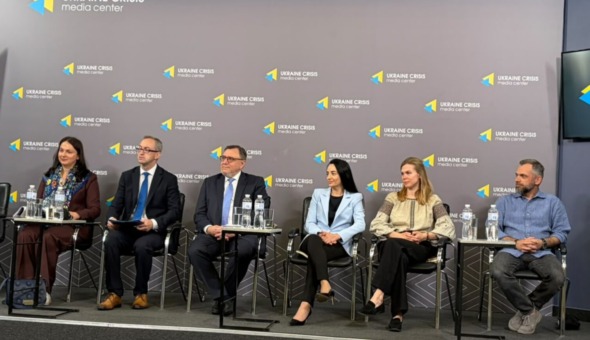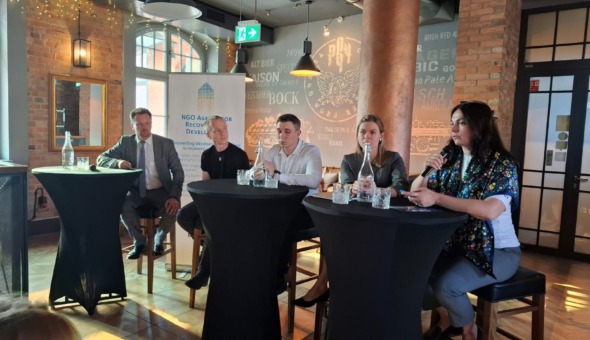
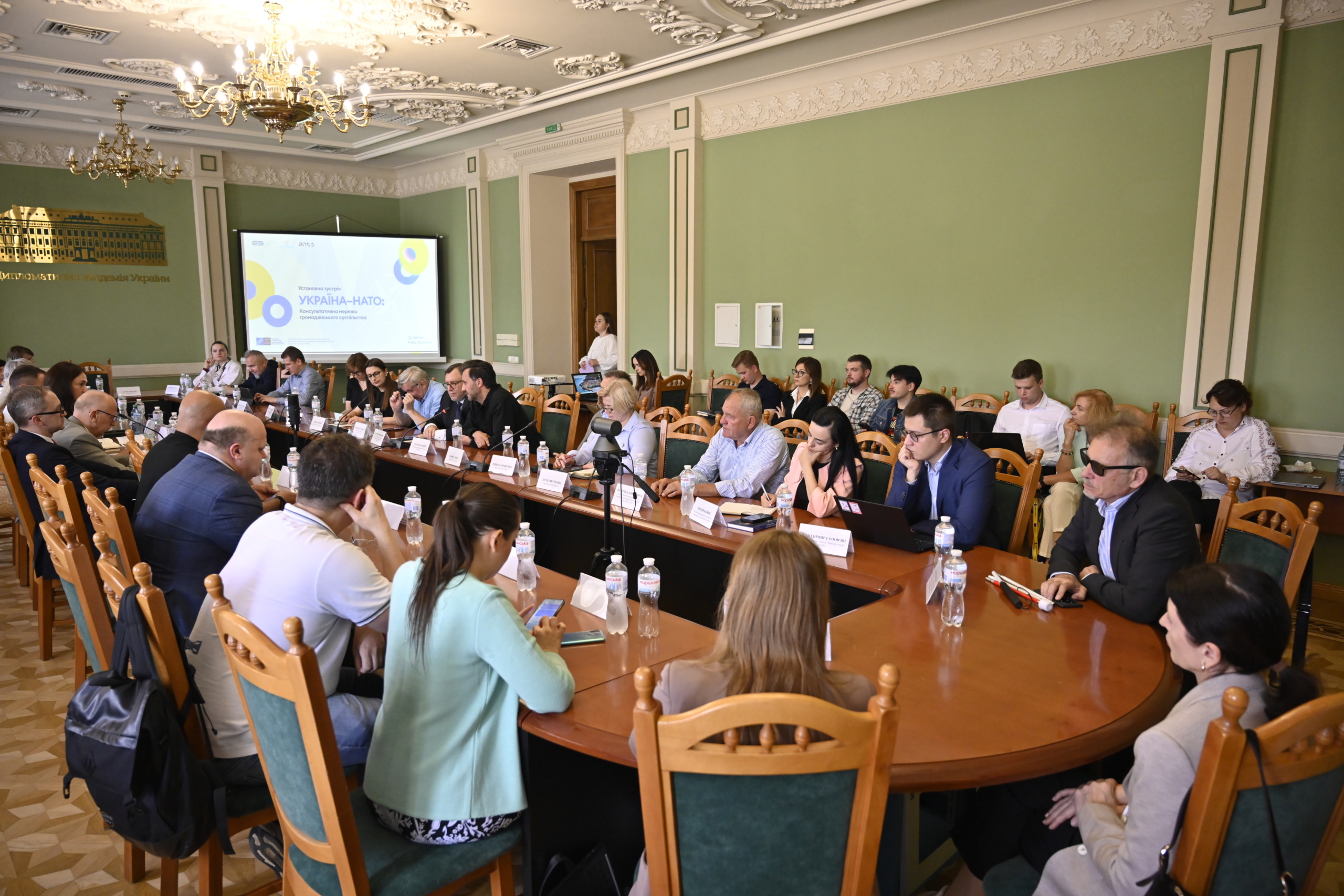
The inaugural meeting of the Ukraine–NATO Civil Society Consultative Network — a new platform for strategic dialogue between state institutions, the security and defense sector, think tanks, and civil society — was held in Kyiv. The establishment of the network was initiated by the non-governmental organization National Interests Advocacy Network “ANTS”. During the event, participants were presented with the network’s goals, working format, and priorities, which is intended to become a permanent platform for developing recommendations on reforms, strengthening state and societal resilience, and fostering innovations on Ukraine’s path to NATO membership. A series of thematic meetings was also announced, focusing on three key areas: defense innovations and technologies, security and defense sector reform, and strengthening state and societal resilience. The developed recommendations will be presented to government authorities and international partners to support Ukraine’s Euro-Atlantic integration.
“By countering the aggressor, especially in an asymmetrical manner and on enemy territory, Ukraine demonstrates its agency and has gained recognition as a key guarantor of European security. Our experience, technologies, and lessons of modern warfare should strengthen the Alliance and shape joint actions to build a new security architecture. That is why the need for strategic dialogue between Ukrainian stakeholders and NATO is growing. At the same time, strengthening the dialogue within the country—between state institutions, the security and defense sector, the expert community, civil society, and veterans—is equally important. The Ukraine–NATO Consultative Network is created specifically to unite these voices, consolidate efforts, develop high-quality recommendations, and strengthen Ukrainian leadership on the path to Alliance membership”, stated Hanna Hopko, Chair of the Board of the ANTS Network.
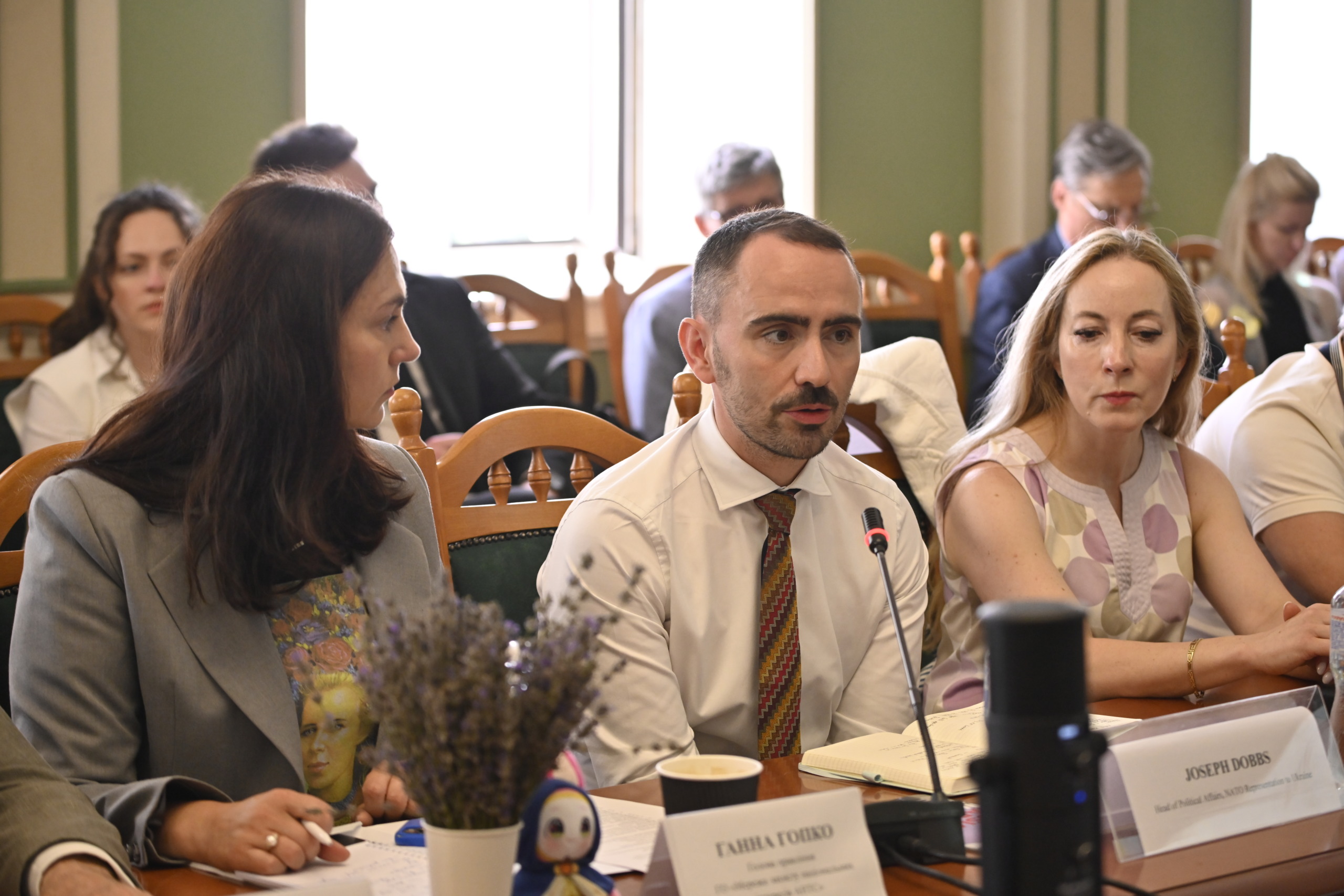
Welcoming the participants of the inaugural meeting, NATO Representative in Ukraine Joseph Dobbs noted the importance of creating new platforms for dialogue between state institutions, the expert community, and civil society. According to him, recent years have demonstrated the unique role of Ukrainian civil society in promoting reforms, supporting democratic transformations, and strengthening the state’s defense capabilities. He also emphasized that the results of the recent NATO summit confirmed the growing awareness among allies of Ukraine’s role as a significant contributor to Euro-Atlantic security. In the context of a prolonged war, the search for new cooperation formats takes on special importance, allowing not only to maintain the current level of interaction between Ukraine and NATO but also to shape a vision of future steps towards deepening the partnership and Ukraine’s membership in the Alliance.
“In recent years, we have seen how Ukraine demonstrates an extraordinary capacity for innovation, generating new ideas, and finding solutions. A significant part of these changes is born through the cooperation of state institutions and civil society. That is why initiatives like the Ukraine–NATO Consultative Network are extremely important for shaping the future of our relations and jointly seeking new formats of cooperation”, noted Joseph Dobbs.
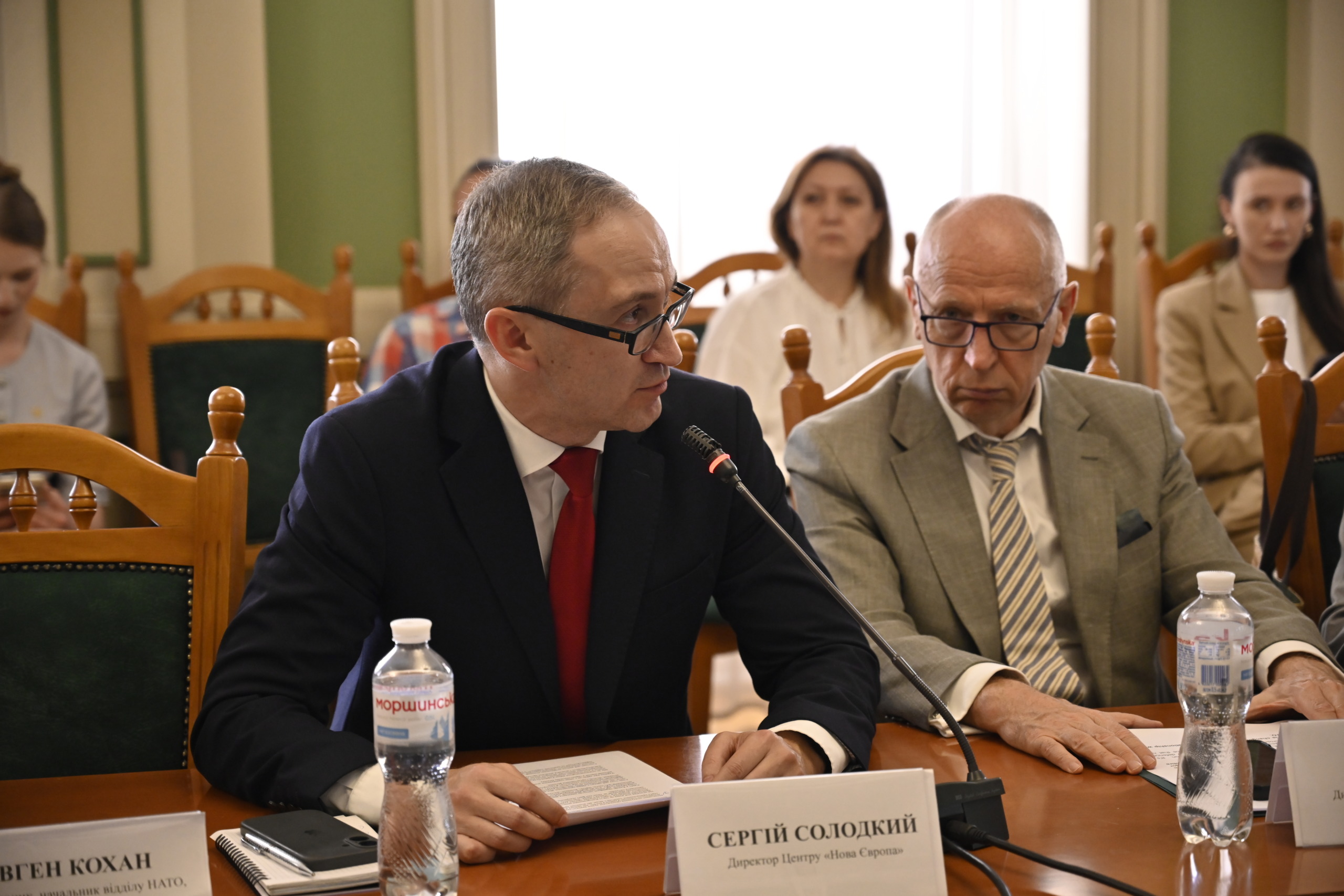
Director of the New Europe Center Sergiy Solodkyy welcomed the creation of the Ukraine–NATO Consultative Network, calling it an important step toward restoring systemic dialogue between the expert community, civil society, and Ukraine’s partners. According to him, the network can become an effective platform for developing practical recommendations and strengthening interaction between Ukraine and NATO amidst new security challenges.
“It is very important that today we are essentially restoring the tradition of systemic dialogue and interaction between the expert community, civil society, and our partners. Such initiatives existed before, but now is the right moment to relaunch them. We see that the allies are increasingly listening to Ukraine, and support for our state is acquiring a more practical dimension. That is why such platforms should help transform a shared vision into concrete decisions and steps necessary for Ukraine’s further advancement on the path to NATO”, Sergiy Solodkyy noted.
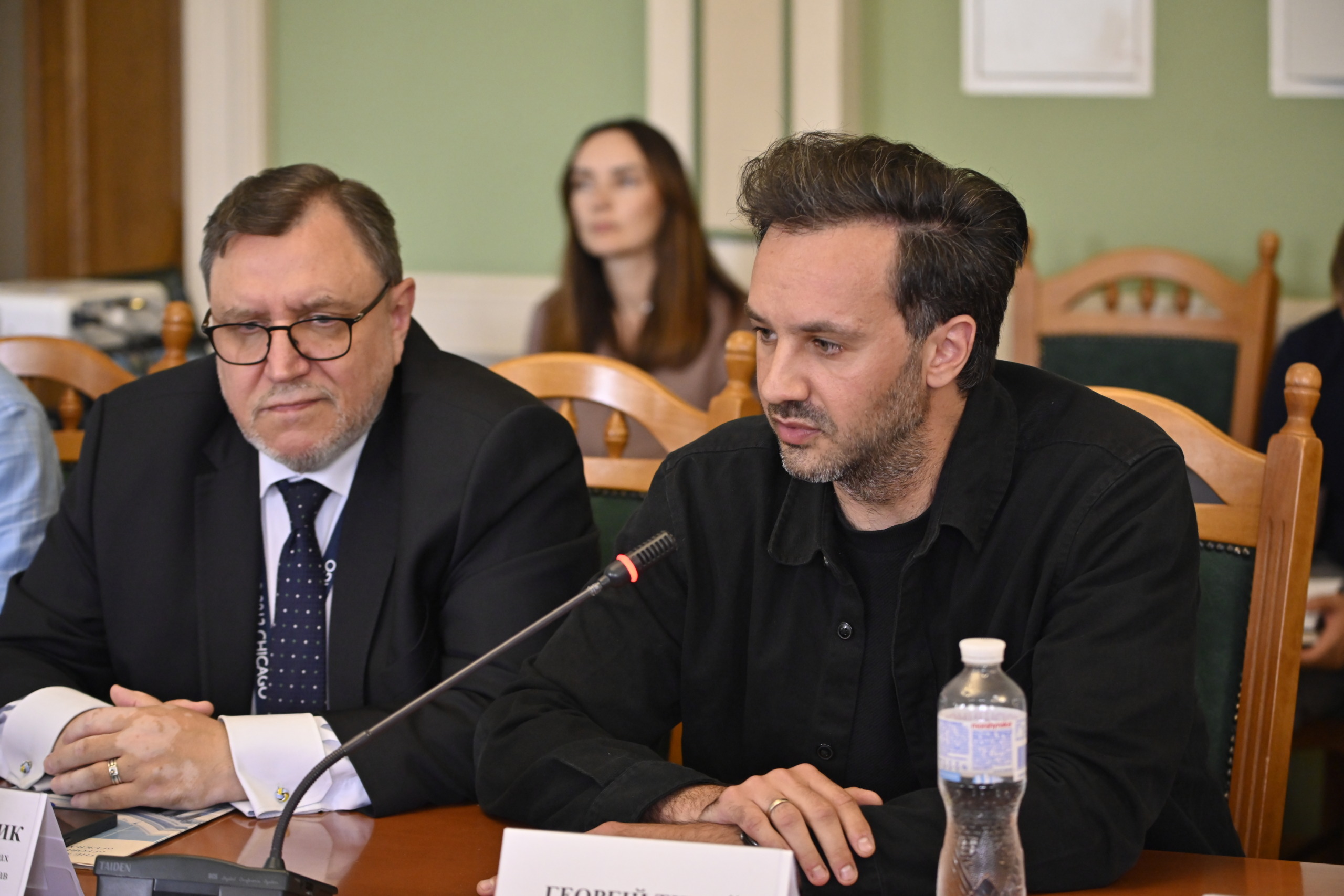
Spokesperson for the Ministry of Foreign Affairs of Ukraine Heorhii Tykhyi emphasized the importance of consolidating the efforts of state institutions, the expert community, and civil society to advance Ukraine’s Euro-Atlantic integration. According to him, the special value of the Ukraine–NATO Consultative Network lies in its ability to unite representatives of different sectors around a shared vision of Ukraine’s future membership in the Alliance and to ensure continuous dialogue between Ukrainian stakeholders and international partners.
“Many people forget that it is not armed forces or governments that join NATO—countries join NATO. That is why it is extremely important for state institutions, the expert community, and civil society to work together on this path. Platforms like the Ukraine–NATO Consultative Network create a space for this dialogue and help shape joint decisions necessary for Ukraine’s further advancement towards Alliance membership”, stated Heorhii Tykhyi.
On behalf of the Ministry of Foreign Affairs of Ukraine, Andrii Pravednyk welcomed the participants, emphasizing the importance of coordination between state institutions, the expert community, and civil society on issues of Euro-Atlantic integration. He noted the potential of the Ukraine–NATO Consultative Network as a platform for exchanging expertise and developing practical recommendations, and also confirmed the MFA’s interest in further cooperation within the initiative.
“It is important for the Ministry of Foreign Affairs to support platforms that unite state institutions, think tanks, and civil society around strategic issues of Euro-Atlantic integration. We are interested in further cooperation and are ready to join the network’s work to jointly develop decisions necessary to advance Ukraine towards NATO membership”, said Andrii Pravednyk, Ambassador at Large at the NATO Department of the Ministry of Foreign Affairs of Ukraine.
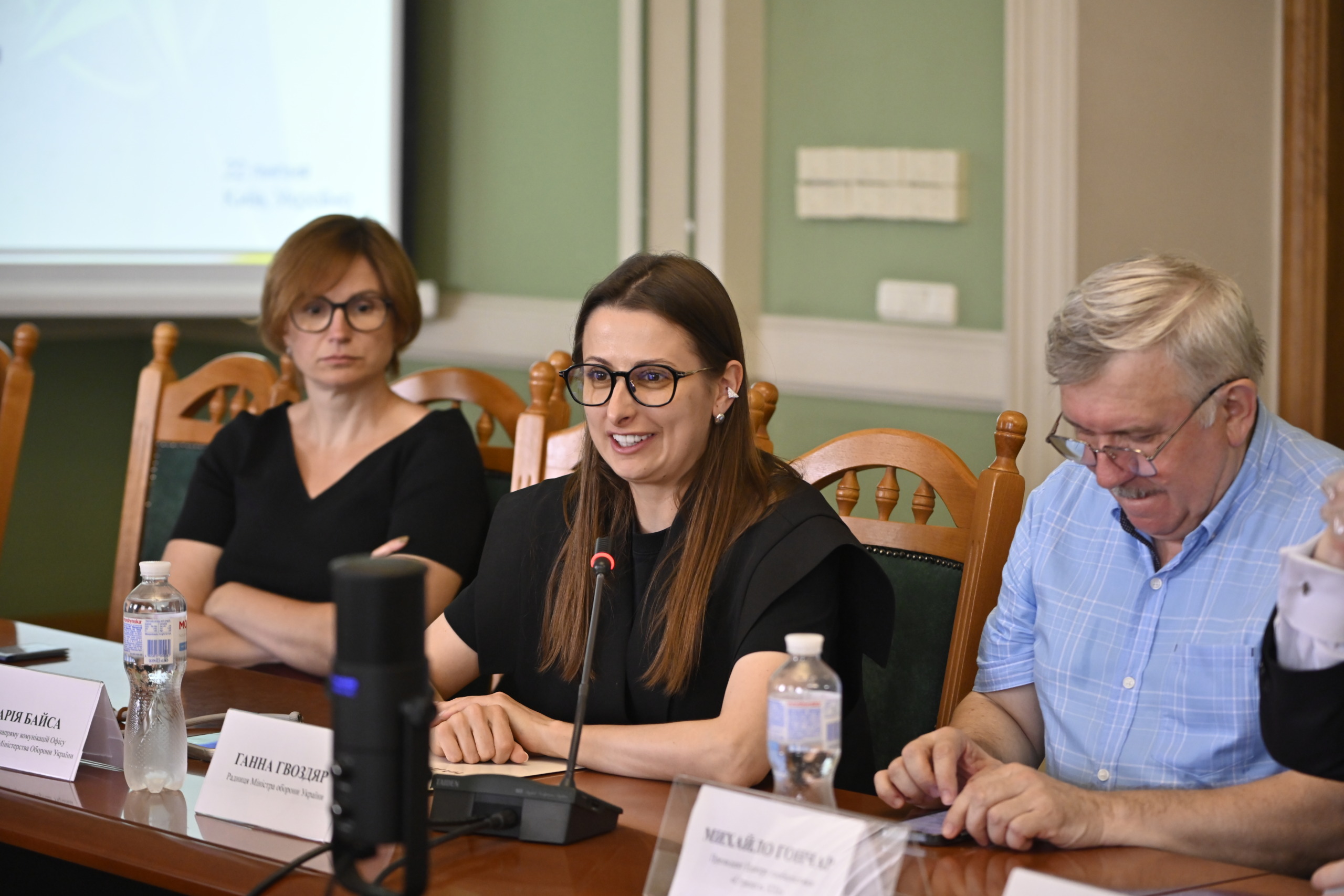
Special attention during the meeting was given to the development of defense innovations and the strengthening of interaction between the state, the expert community, and civil society. Deputy Minister of Defense of Ukraine Hanna Hvozdiar emphasized that in the context of full-scale war, innovative solutions and effective cooperation between different sectors are essential prerequisites for strengthening the state’s defense capabilities.
“Today, defense innovations are an integral part of our security and an important element in the development of Ukraine’s defense ecosystem. It is extremely important for us to involve the expert community in this work, because it is precisely the combination of knowledge, experience, and practical solutions that allows us to respond faster to challenges and strengthen the capabilities of the security and defense sector”, stated Hanna Hvozdiar.
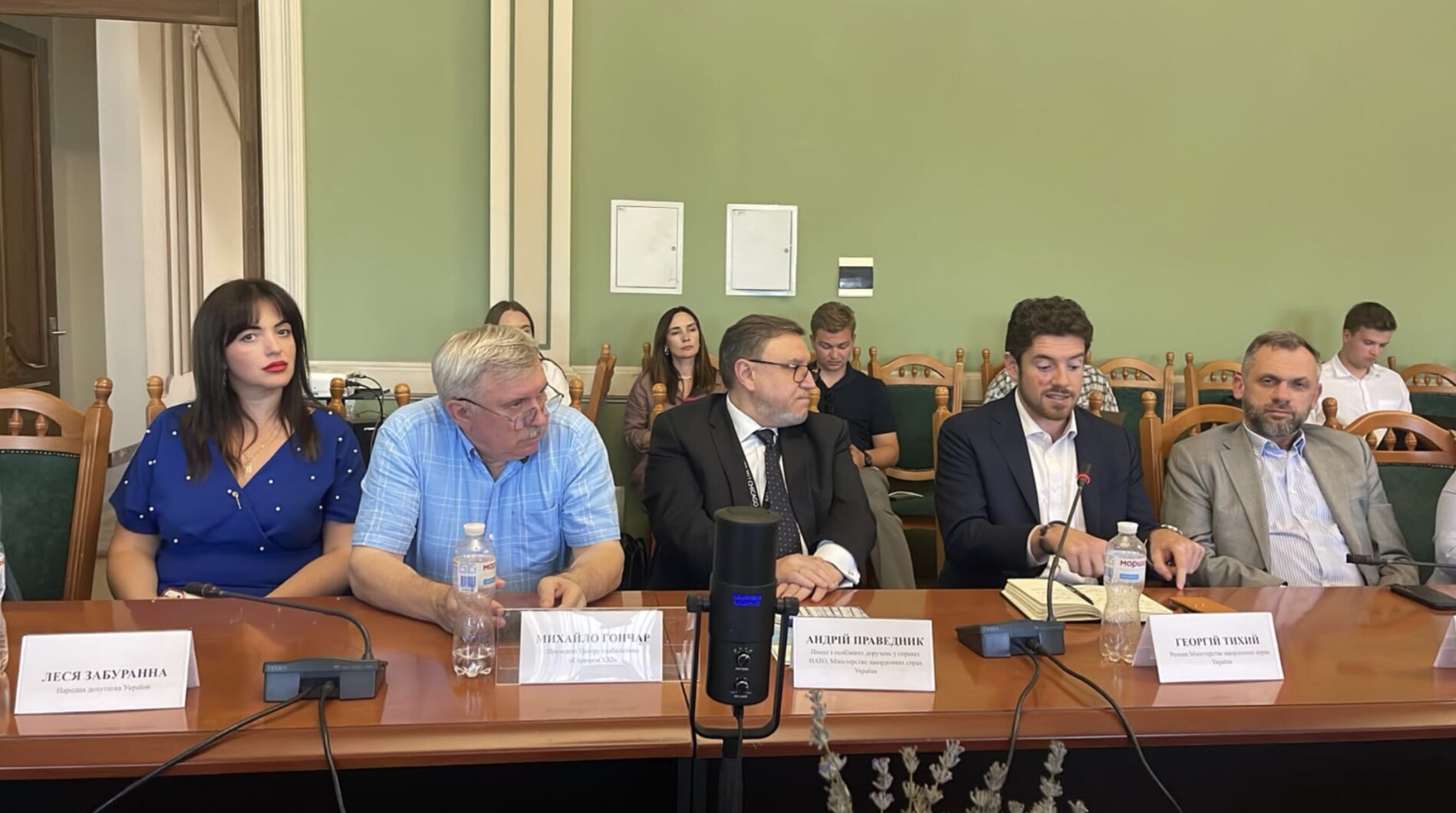
Member of Parliament of Ukraine, Deputy Chair of the Verkhovna Rada Committee on Budget Lesia Zaburanna emphasized the role of parliament in ensuring Euro-Atlantic integration and that this process should be seen as mutually beneficial:
“Ukraine’s integration into NATO is not a unilateral request for help, but a mutually beneficial process. In exchange for reliable security guarantees, the Alliance receives the most combat-ready army in Europe, unique combat experience, and the practice of waging a new type of war, as well as one-of-a-kind experience in critical infrastructure resilience — when energy, heat supply, and water supply operate under daily missile and drone strikes. This is a level of readiness that cannot be acquired during exercises. Our task in the Verkhovna Rada is to provide a legislative and budgetary foundation so that this experience is systematically transferred to our allies and so that NATO helps Ukraine scale solutions regarding protection for the security of the civilian population in Ukraine. That is why platforms like the Ukraine – NATO Consultative Network are needed: they turn our experience into a shared security resource”, Lesia Zaburanna noted.
Member of Parliament of Ukraine of the 8th convocation Andrii Levus stressed that Ukraine’s further advancement on the path to NATO membership depends on the implementation of internal reforms. According to him, key tasks remain strengthening democratic civilian control over the security and defense sector, updating legislation in the field of special services activities, and aligning the regulatory framework with NATO and European Union standards.
“We can count on the support of our partners, but we must do our own homework. This primarily concerns security and defense sector reforms, strengthening democratic civilian control, and updating legislation on special services and state secrets. These are the changes our partners expect from us, and they are necessary not only for NATO membership but also for building a modern and effective national security system”, Andrii Levus noted.
Chair of the Board of the Ukraine Crisis Media Center, Ambassador Extraordinary and Plenipotentiary of Ukraine Valeriy Chaly spoke about the importance of maintaining the continuity of Ukraine’s Euro-Atlantic course and strengthening the role of civil society in supporting reforms. He noted that the Ukraine–NATO Consultative Network continues the years-long work of Ukrainian experts, diplomats, and non-governmental organizations that have consistently promoted the idea of Ukraine’s membership in the Alliance. According to him, today it is particularly important to combine accumulated experience with new approaches and focus on the practical accompaniment of reforms necessary for Ukraine’s integration into NATO.
“Over the past decades, Ukraine has come a long way towards NATO, and civil society has always played an important role in this process. Today, we already have enough strategies, concepts, and developed solutions. Now the key task is to help implement them, provide expert accompaniment for reforms, and maintain continuous dialogue between the government, the expert community, and society. That is why initiatives like the Ukraine–NATO Consultative Network are particularly timely and important”, Valeriy Chaly noted.
The project “Ukraine–NATO: Consultative Civil Society Network” is sponsored by the North Atlantic Treaty Organization (NATO). The views and opinions expressed in this publication are those of the authors and do not necessarily reflect the official policy or position of NATO.