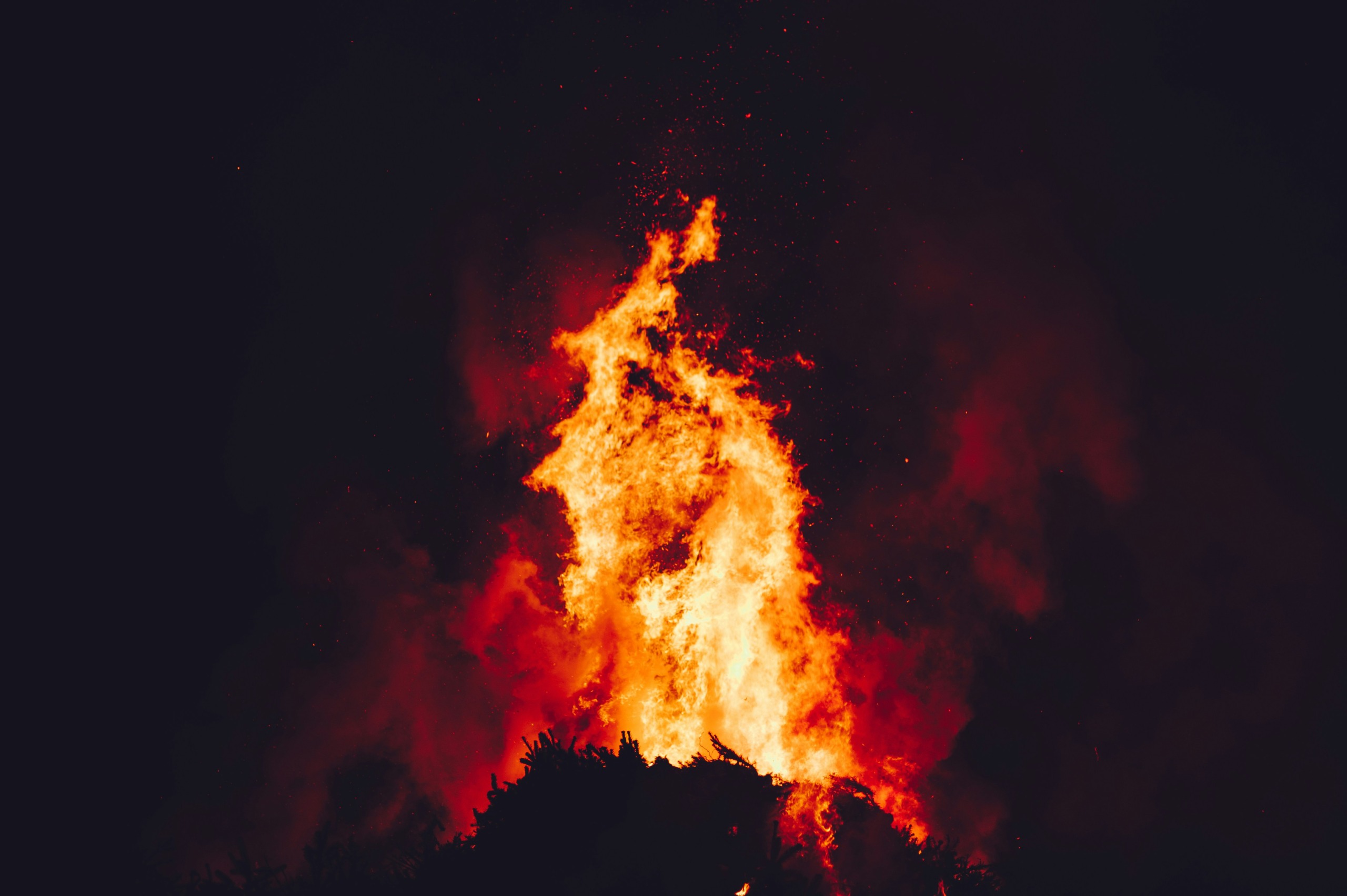
When we talk about the consequences of the war for Ukraine, the conversation most often centers on human losses, destroyed infrastructure, the energy sector or the economy. Far less frequently do we hear about ecosystems, which have equally found themselves on the front line. Yet this is where one of the most underestimated threats of the coming years is taking shape — the risk of large-scale wildfires in natural ecosystems, amplified simultaneously by the war and climate change. This issue has long since outgrown the bounds of a purely environmental topic. It concerns community safety, air quality, public health, soil condition, water balance, forest resilience, and the state’s ability to manage territories — a significant portion of which have been affected by combat, mining, and the degradation of natural resources. Today, fires in natural ecosystems are not just about flames. They are about an accumulation of risks that could produce an explosive effect in the very near future.
Fire as a new front: why Ukraine is entering a period of high fire risk
Ukraine is entering a period of critical fire risk due to an accumulation of systemic factors that have already shaped a new reality for natural ecosystems. The combination of the full-scale war’s consequences and climate change significantly increases the likelihood of large-scale fires. Mined territories, mechanically damaged forests, the aftermath of shelling and arson, and limited access to large swaths of forested land all complicate both prevention and firefighting efforts. At the same time, climate change — rising temperatures, prolonged droughts, and shifting precipitation patterns — is creating favorable conditions for the rapid spread of fire. According to experts, including the Regional Eastern European Fire Monitoring Centre, up to 30% of Ukraine’s forests — some 2,5 to 3 million hectares — are located in combat zones or on occupied territories, while around 7 million more hectares are experiencing indirect war-related impacts. This means that virtually all of the country’s forest ecosystems are already in a zone of elevated risk. Under these conditions, fires are no longer a seasonal problem but a potentially large-scale crisis with far-reaching environmental, economic, and security consequences.
The fire threat has already ceased to be seasonal or local. Since February 24, 2022, more than 2 million hectares of vegetation fires outside populated areas have been recorded in Ukraine, resulting in the release of 48.7 million tonnes of greenhouse gases into the atmosphere. The unprecedented fires of 2020–2025 make it clear: the country is already living in a new reality in which fire in natural ecosystems is becoming increasingly frequent, faster-moving, and more dangerous.
Particularly alarming is the fact that the majority of ignition sources are not natural but human in origin. Up to 90% of fire incidents are linked to arson — meaning most of them could have been prevented. Additional contributing factors include stubble burning, the spread of fire from agricultural land into natural landscapes, and — in wartime conditions — explosions, shelling, and other mechanical damage to territories. In other words, this is not merely a natural disaster but a risk management crisis compounded by the war, weak inter-agency coordination, and insufficient prevention. In this sense, wildfires in natural ecosystems are a test of the maturity of state policy. Because when a forest is burning, it is already too late to speak only of response. What is needed is an early detection system, trained personnel, adequate technical equipment, inter-agency coordination, and a clear understanding that prevention — not firefighting — must be the priority.
How to prevent fires in 2026
To prevent large-scale fires in the 2026 season, research by the ANTS National Interests Advocacy Network shows that the key priority must be prevention over suppression. This means the systematic implementation of measures already outlined in the policy brief: establishing early fire detection systems (including satellite monitoring and weather-based forecasting), patrolling territories on high fire danger days, and carrying out preventive measures — creating firebreaks, managing vegetation, mowing areas, and conducting controlled burns of ground litter exclusively by professional services. As Dr. Serhiy Zibtsev, Doctor of Agricultural Sciences, emphasizes, a distinct role is played by work with the population and land users, including ending the practice of stubble burning and raising community awareness.
The research also underscores the need for inter-agency coordination and the designation of a single authority responsible for managing landscape fires, as well as investment in technical equipment and personnel training. Without the implementation of these systemic solutions, fire risks will remain high even in the absence of extreme weather conditions.
The European Union has already established a clear approach to fire risk management — one built on the principle of prevention rather than response alone. The EU Forest Strategy for 2030 identifies increasing the climate resilience of forests as one of its key priorities and establishes a systemic fire prevention policy. The Guidelines on Wildfire Prevention on Land detail practical tools: vegetation management, reduction of combustible material accumulation, and the creation of firebreaks. For Ukraine, these approaches are not merely “best practices” but part of its obligations under European integration. Adapting to EU environmental and climate policy means introducing active forest management, modernizing monitoring systems, and strengthening institutional capacity. In effect, an effective fire prevention policy is becoming an element of Ukraine’s preparation for full EU membership — with a transition to European standards of risk management and sustainable development.
If the approach is not changed now, fires in Ukraine will become not the exception but the new norm — with consequences far more costly than any prevention effort.
Author:
Svitlana Yednak
Expert at the ANTS Network.