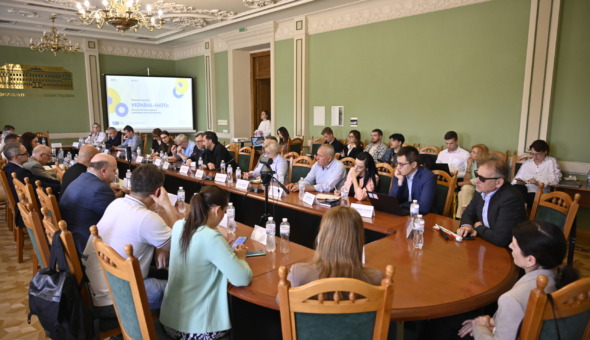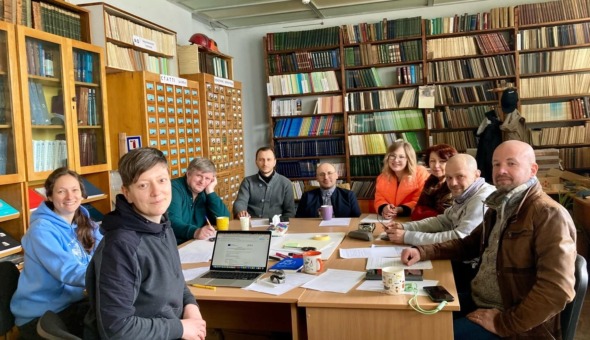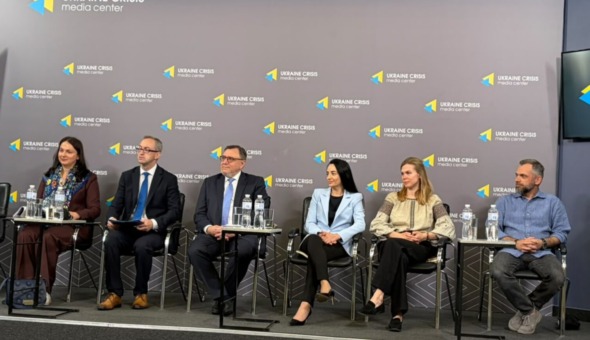
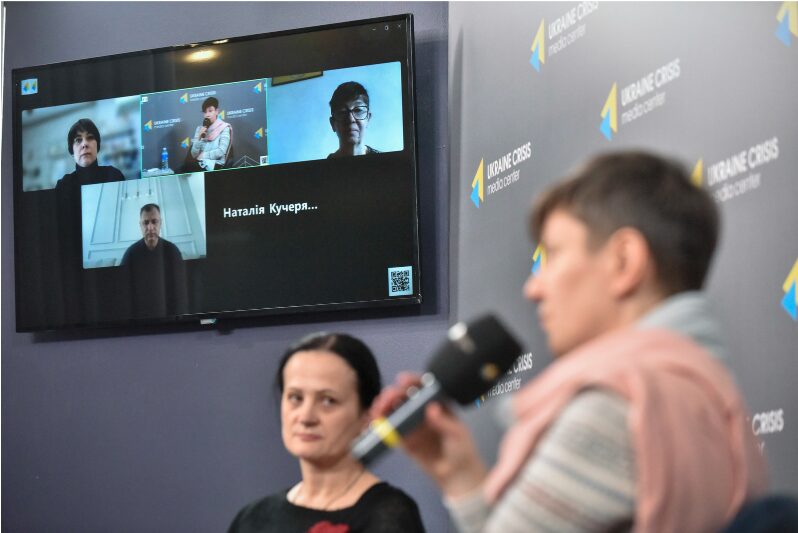
In Ukraine, the crisis in the public sector of culture and heritage is worsening: low salaries, personnel outflow, and the lack of systemic reforms threaten the functioning of thousands of institutions — libraries, museums, and others. This was discussed during the public discussion “Does Salary Decide Everything? How to Preserve the Keepers of Heritage and Knowledge About It,” organized by the National Interests Advocacy Network “ANTS.”
The key topic of the conversation was the situation with human resources and the remuneration of employees in state-funded cultural institutions, which, according to the participants, is catastrophic and is already affecting the future of the entire industry, and consequently, the situation in the country. After all, for many Ukrainians, these institutions become the first center of acquaintance with the history and culture of both their native land and other regions of Ukraine and the world.
“My advance payment is 3800 hryvnias… it is simply a humiliation. A humiliation of dignity and the effort we put into this work,” noted Nataliya Kucheryayeva, Director of the Dykanka Public Library in the Poltava region.
According to experts, this situation is not an exception. It is systemic and directly related to the current salary scale, which does not allow cultural institutions to flexibly respond to challenges and provide decent remuneration. As Halyna Hryhorenko, co-founder of Open Opera Ukraine, Development Director of Kyiv Baroque Fest, and member of the Coalition of Cultural Actors, emphasized, even the official average salary in the cultural sector — about 18,000 hryvnias — is approximately 30% lower than the national average, and the real income of workers in basic institutions is significantly lower.
“80–90% of all expenses in the cultural sector are wages. But even with this, it remains the lowest among all sectors of the economy. This means that the system is virtually unable to provide a decent standard of living for the people working within it and fails to create conditions for attracting new specialists. As a result, we are losing personnel and gradually losing the very capacity of this sphere to function,” she noted.
The consequences are already obvious: the profession is rapidly aging, and young people are not entering the industry. According to the discussion participants, the share of employees under the age of 35 in libraries is only about 9%, while nearly half are people aged 45–60. Such dynamics mean that the system is gradually losing its human resources potential without the possibility of recovery. Experts emphasize: young specialists consciously choose other fields due to the critically low level of remuneration and the lack of development prospects. As a result, cultural institutions are losing not only personnel but also the ability to renew, implement new approaches, and engage with modern audiences. Consequently, in a number of regions today, situations arise where key functions — in particular, methodological support for libraries — are simply not performed due to the lack of specialists. In the long run, this creates the risk of systemic decline: institutions may disappear not because of a decision to close them, but simply due to a lack of people capable of ensuring their operation.
“We see how the profession is rapidly aging right before our eyes. Young people are practically not entering the field, and this is a direct consequence of the conditions in which librarians are forced to work today. If the situation does not change, libraries may disappear not because they are closed by a government decision, but because there will simply be no one to work there. This is not a question of the distant future — it is a process that is happening right now,” emphasized Oksana Bruy, Deputy Director General of the Yaroslav the Wise National Library of Ukraine, President of the Ukrainian Library Association, and Candidate of Sciences in Social Communications.
Another systemic problem is the unevenness of the situation across the country. In some communities, including in rear regions, certain cultural institutions have effectively not been operating since 2022, remaining idle. This means not only a lack of basic cultural services for the population but also a gradual loss of connection between the institution itself and the community, and thus — less support in the future. In small communities, libraries, clubs, or museums often remain the only public spaces where people can access information, education, or basic social interaction. Their closure or formal existence without active operations leads to the isolation of residents, especially vulnerable groups, and undermines the social resilience of communities. The situation also varies significantly by region: institutions in frontline areas often work under increased strain as hubs for internally displaced persons and collections from destroyed museums or temporarily occupied territories, whereas in other communities they may be left without support and development because the community considers it “not the right time.” At the same time, experts emphasize: the problem lies not only in limited resources but also in the lack of clear public policy priorities. Without a vision for the development of culture, science, education, and systemic reforms, even available resources are used inefficiently, and decisions often depend on the subjective attitude of local authorities.
“The problem is not so much in funds as in political will. There is money in the state — the question is how it is distributed and what priorities are set. We are talking about the need for a systemic approach to resource mobilization within the ‘Money for Victory’ concept, which implies both the search for internal reserves and increasing the efficiency of using already available funds. This includes reviewing inefficient expenditures, fighting budget losses, and changing approaches to financing key areas. Culture in this system cannot remain ‘at the bottom of the list,’ because it is an investment in the resilience of the state. Therefore, the key question is whether there is a readiness to make decisions that change the system, and not just support its existence,” noted Ihor Krupka, Head of the Analytical Department of the “ANTS” Network.
The moderator of the discussion, Kateryna Chuyeva, an expert from the ANTS National Heritage Protection Network, emphasized the importance of a comprehensive approach to heritage management. Today, institutions that care for heritage — cultural, natural, scientific, documentary, and living heritage — not only have different subordinations. The peculiarities of the regulatory framework create different (often unequal) conditions for them, blur responsibility, and complicate the realization of their mission.
The discussion participants noted: without a comprehensive reform — not only of the remuneration system but also of the heritage management model, and, accordingly, the cultural institutions that care for it — the situation in the sphere will only worsen. It is not just about funding, but about the need to rethink the role of culture in state policy. At the same time, experts emphasize: the problem is much deeper and relates to the strategic decisions of the state.
“To change the situation, political will is needed. Without a clear understanding of what exactly the state wants to preserve, support, and develop in culture, systemic changes are impossible,” noted Natalia Skliarska, cultural manager and expert of the National Heritage Protection Network of the “ANTS” Network.
In this context, culture is viewed not as a secondary industry, but as the foundation of the state’s resilience, especially in the context of a full-scale war. It is about the society’s ability to preserve identity, cohesion, and internal stability in times of crisis. During wartime, cultural institutions perform a much broader function than before — they become spaces of support, integration, and preservation of social ties, as well as tools to counter disinformation and the destruction of identity.
“If we are saying that this war is being waged for identity, then culture must be protected primarily within the country. This is not a matter of secondary priorities — it is a matter of our resilience as a society. And without a systemic state policy that takes these challenges into account, we risk losing not only the institutions but also what they preserve and must literally pass on to future generations,” emphasized Kateryna Chuyeva.
This publication is implemented with the financial support of the European Union. The content of this event is the sole responsibility of the NGO “National Interests Advocacy Network ‘ANTS’” and does not necessarily reflect the position of the European Union.