More than eleven years have passed since Russia’s invasion of Ukraine, marking the beginning of a war of attrition that has tested not only the Ukrainian military but also the state’s ability to strategically mobilize its financial, political, and human resources.
Despite unprecedented support from partners, the gap between Ukraine’s needs and available resources remains critical. U.S. assistance has been reduced to a minimum, “war fatigue” is growing in Europe, and important decisions within the country — from customs and economic security reforms to governance modernization — continue to be delayed.
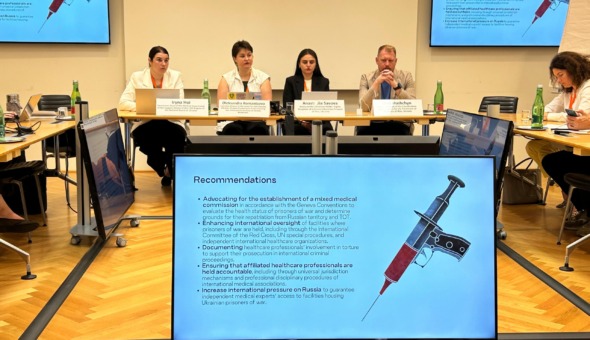
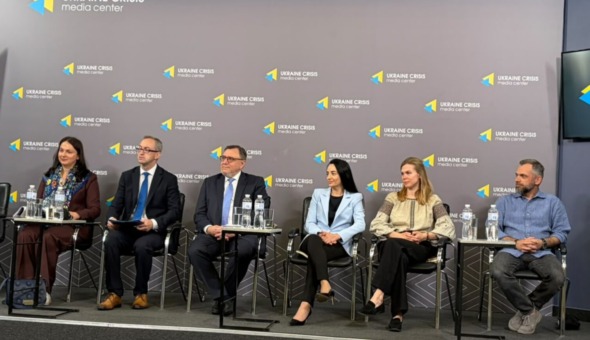
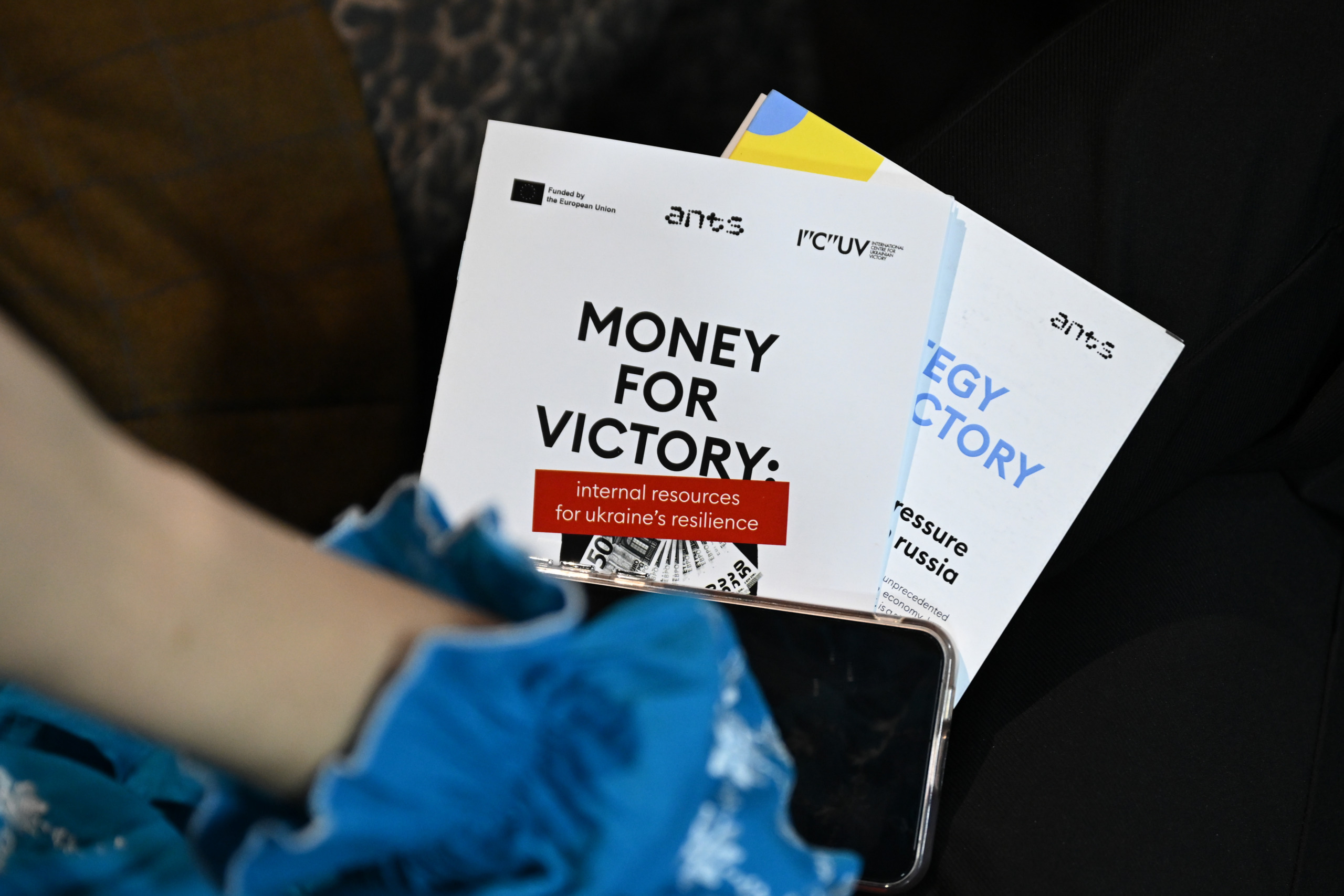
That is why the ANTS Network, in partnership with the International Center for Ukrainian Victory (ICUV), held the conference “MONEY FOR VICTORY: MAKE RUSSIA PAY,” aimed at answering key questions: What must our partners do to make Ukraine’s victory a matter of shared responsibility? And what more can we do ourselves?
“When we speak of Make Russia Pay, it is a comprehensive concept encompassing political, military, legal, economic, and financial dimensions. We need even greater support from our partners, because this war is not only against Ukraine — it is an existential war for Europe and the entire democratic world. The involvement of Iran and North Korea in the conflict confirms that its consequences are global in scope — from the Global South to the Indo-Pacific region,” said Mariana Betsa, Deputy Minister of Foreign Affairs of Ukraine, in her opening remarks.
The main topic of the conference, now in its second year, was the confiscation of frozen Russian assets for the benefit of Ukraine. Special attention was given to the reparations loan initiative launched by the European Commission, intended as a practical and urgently needed step forward. Its purpose is not to confiscate assets, but to use the proceeds from frozen Russian state assets as collateral to finance Ukraine’s urgent defense and reconstruction needs. This mechanism should serve as the first step toward the full transfer of frozen Russian funds to Ukraine.
“The reparations loan is not the end of the process, but the beginning of a new phase of accountability. Our common goal is the full transfer of frozen Russian assets to Ukraine. Ukraine calls on its partners to join the EU initiative and align approaches to the lawful use of frozen assets. Today, over $300 billion in frozen Russian assets represent a historic opportunity to demonstrate that international law can work. If these funds remain untouched, it will send a signal of impunity. We are making it clear to our partners that it is for us to decide how the money from our reparations loan will be used. This is our number one priority,” said Iryna Mudra, Deputy Head of the Office of the President of Ukraine, in her opening remarks.
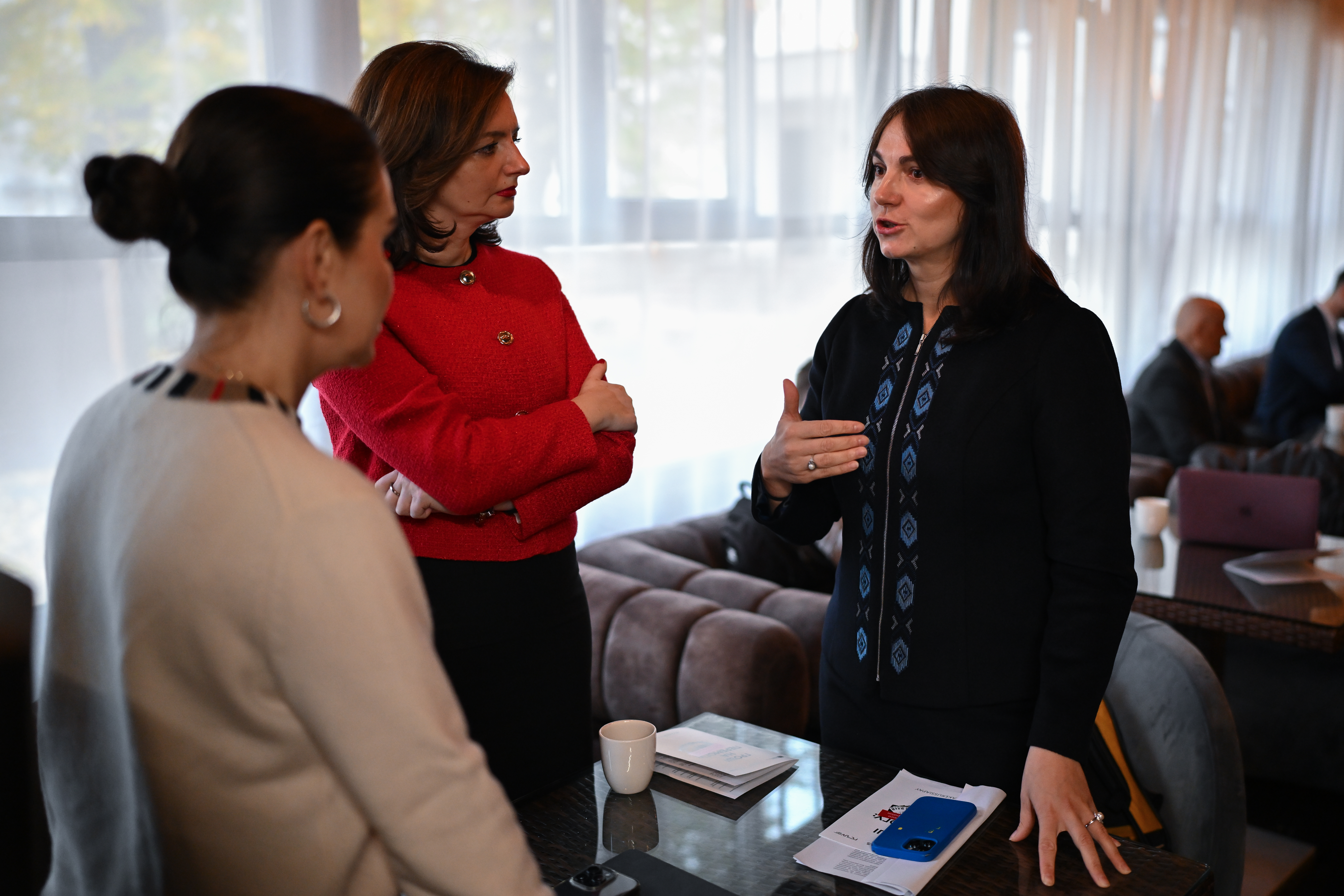
“Russia, as an aggressor committing genocide against the Ukrainian people and waging war in Europe, must pay the full price. To achieve this goal, Ukraine must secure the resources necessary for victory and reconstruction. Signs of a shift in political will are already visible in Europe, with sensitive discussions ongoing regarding the reparations credit mechanism. What seemed like a ‘Mission Impossible’ just two years ago is now becoming the subject of concrete decisions. The Make Russia Pay campaign is about the synergy of efforts and tireless advocacy,” emphasized Hanna Hopko, Chair of the Board of the ANTS Network and co-founder of ICUV.
Significant attention was also given to Ukraine’s internal potential: analysts stressed the need for systemic reforms in customs, tax administration, and the Bureau of Economic Security — reforms that could generate tens of billions of hryvnias in additional budget revenue. Participants also highlighted the importance of a new model of shared responsibility based on partnership: Ukraine continues on the path of reform and strengthens transparency, while international partners assume political responsibility for financial support, sanctions pressure, and the use of Russia’s frozen assets.
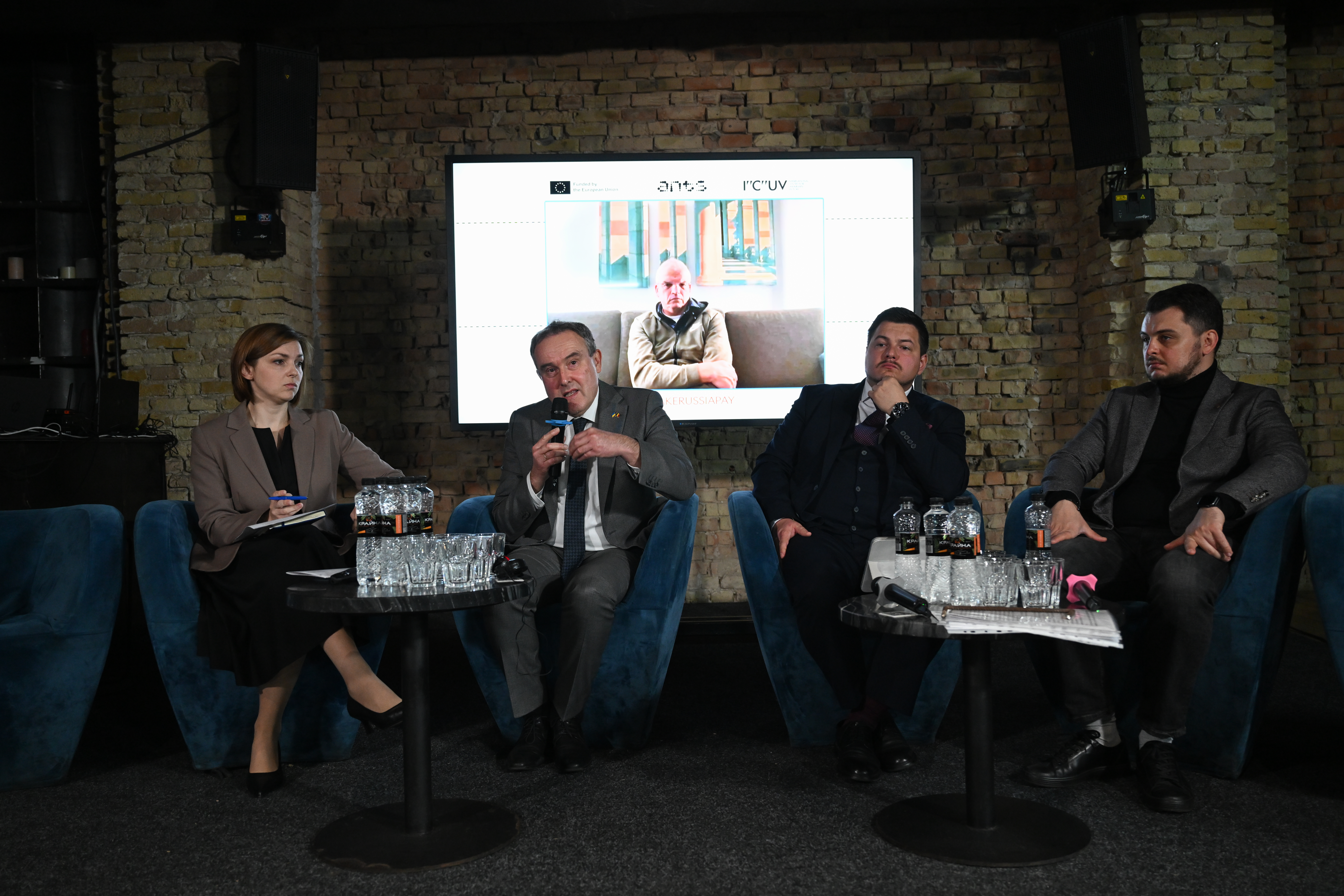
“The Russian war is an existential threat to Europe. Ukraine is bravely resisting the Russian army, but our resources are not unlimited. Every day of delay in our partners’ decision-making leads to the loss of the most precious thing — human lives. So-called ‘peace initiatives’ that reward the aggressor for waging war only push the prospect of real peace further away. It is time to stop seeking temporary fixes and compromises, and instead focus on the systemic strengthening of security and defense across all of Europe. The use of immobilized Russian assets for Ukraine must become the first step on this path,” said Olena Halushka, co-founder of the International Center for Ukrainian Victory (ICUV).
During the discussions, particular attention was paid to the European Union’s geopolitical role, energy security ahead of the winter season, and the strengthening of Ukraine’s defense capacity through European cooperation mechanisms. “Russia is intensifying its attacks on Ukraine’s critical infrastructure every day and every night. We must demonstrate that the world continues to stand with Ukraine — providing not only military but also financial support,” said Yaroslav Tymofiychuk, Head of the Political Section of the European Union Delegation to Ukraine.
As part of the conference “MONEY FOR VICTORY: MAKE RUSSIA PAY,” the ANTS Network presented a new analytical study titled “Money for Victory,” which provides a detailed assessment of Ukraine’s financial risks for 2025–2026 and identifies how the country can offset the reduction in external assistance through its own internal reserves.
According to the analysts’ findings, Ukraine faces an unprecedented challenge: the need to finance its defense and maintain macro-financial stability at a time when international support is significantly decreasing.
The main reasons for this include:
- a shift in U.S. policy and the effective suspension of direct budgetary assistance following Donald Trump’s election;
- the conditional nature of EU funding under the Ukraine Facility (€50 billion), dependent on the implementation of reforms;
- a record budget deficit of UAH 2.54 trillion, threatening the sustainability of public finances.
The study outlines four key directions for increasing state budget revenues:
- Combating the shadow economy — primarily through customs reform, labor market de-shadowing, and tighter control over excisable goods and the gambling sector.
- Optimizing tax policy — gradual alignment of excise rates with EU levels, introduction of a progressive personal income tax, and taxation of luxury goods and postal imports.
- Increasing the efficiency of state asset management — auditing and boosting dividends from state-owned enterprises, ensuring transparent privatization, and improving returns from ARMA-managed assets.
- Optimizing public spending and stimulating the economy — cutting ineffective programs, deregulation, and supporting domestic production.
According to ANTS Network estimates, implementing these measures could mobilize up to ₴500 billion in additional annual revenue, becoming a crucial resource for financing defense, supporting the Armed Forces, and maintaining the country’s macro-financial stability.
“Despite the war, Ukraine has internal reserves to increase budget revenues, based on fairness, efficiency, and economic growth potential. Fairness lies in eliminating shadow schemes and increasing taxation on luxury and excise goods; efficiency — in confiscating Russian assets and maximizing returns from their use; and growth potential — in removing artificial barriers to the development of Ukraine’s own defense industry,” said Illia Neskhodovskyi, Head of the Analytical Department of the ANTS Network.
The study also identifies the scale of the shadow economy — accounting for 20–40% of GDP — as the main challenge, causing hundreds of billions of hryvnias in annual budget losses. Systemic efforts to combat shadow schemes and implement transparent fiscal governance could therefore become the foundation of Ukraine’s financial independence during wartime.
This publication was prepared during the project, «Stronger Europe, United Front – Advancing Ukraine’s EU Membership for Greater Resilience and Security», was funded by the European Union. The content of this publication/video/material is the sole responsibility of the “ANTS” NGO and does not necessarily reflect the views of the European Union.