We risk losing not only the unique ecosystems of the Carpathians, but also Europe’s trust. When environmentalists sound the alarm, society must listen more carefully. In recent months, a dangerous trend has emerged: instead of seeking a balance between energy security and environmental protection, Ukraine is witnessing an artificial conflict being created between nature and so-called “green energy.”
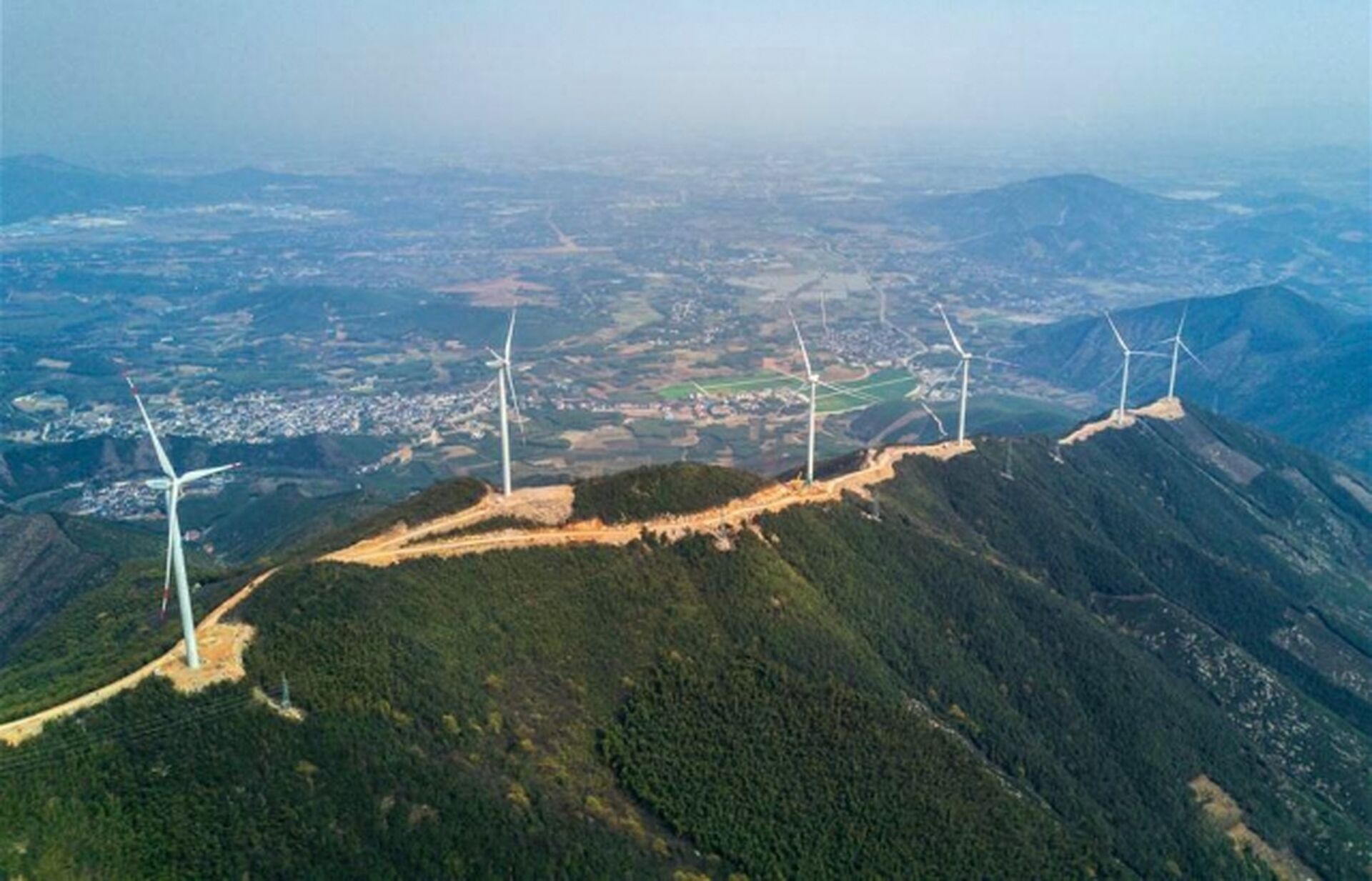
A large-scale energy project is planned in the Carpathians — the construction of wind farms with a total capacity of 1.5 GW. In wartime, this might sound like good news: expanding renewable capacity, reducing dependence on fossil fuels, and strengthening energy independence. But there is one critical nuance — the sites chosen for construction are among the most valuable natural areas in Ukraine. The project targets seven high-mountain ridges of the Ukrainian Carpathians, including the Verkhovyna Watershed. These territories are part of the Emerald Network — unique sanctuaries of wildlife, subalpine biodiversity, and ancient forests, cherished for ecotourism and recreation. And yet, it is precisely these pristine landscapes that are now at risk of being turned into industrial zones.
Thus, we are now facing a choice that no one has the right to make: the development of green energy or the preservation of biodiversity. In reality, the answer is clear — it is never either–or, but always both–and. European integration requires Ukraine not only to increase the share of renewables in its energy mix but also to meet its commitment to place 30% of the country’s territory under protection. Yet instead of a strategic approach, we are witnessing the opposite: urban planning and environmental legislation are being adjusted to fit specific investment projects. This is no longer merely a warning sign — it is a threat of irreversible loss of unique landscapes. Without clear criteria and consistent rules, we risk putting the cart before the horse: chaotic developments that may bring short-term profit but will destroy the future of the Carpathians — one of the greatest natural treasures of Ukraine and Europe.
Legislative Chaos: When State Institutions Side with Developers
Over the past year, an alarming trend has emerged: all branches of government appear to be working in sync to promote massive development projects in the Carpathians. This is not just about individual investors — it’s about entire schemes reinforced by laws, amendments, and the inaction of regulatory agencies. Parliament has passed legislation that effectively allows Article 12 of the Law on the Regulation of Urban Development to be ignored. In practice, this means that local councils can now unilaterally decide what to build in the highlands — whether resorts, wind farms, or other large-scale projects. Another law, which came into force on August 8, even retroactively “legalized” documents that violate fundamental norms — a direct threat to the Constitution. Regulatory inspections have effectively stopped functioning. For instance, the State Inspectorate for Architecture and Urban Planning (DIAM) has claimed that the foundation for a wind turbine does not require an environmental impact assessment — a stance that looks like blatant favoritism toward developers. Cases from Mount Runa and the Svidovets range only confirm the pattern: instead of environmental protection, we see excuses and formal replies.
Government agencies and line ministries often cite EU directives — particularly the Renewable Energy Directive — to justify the simplification of permitting procedures. The problem is that in the EU, such simplifications were introduced only after comprehensive environmental assessments had been carried out. In Ukraine, these assessments have not even been properly implemented — yet they are already being “simplified.” This is not European integration; it is a simulation of it — one that has nothing in common with real EU standards. Even the courts often side with investors, citing “wartime needs” and the importance of developing alternative energy. But a cornerstone of any civilized process is the consideration of alternatives — something that is entirely absent in Ukraine. Under the slogans of European integration and energy independence, we risk losing not only the unique ecosystems of the Carpathians but also Europe’s trust — which depends on our genuine commitment to international environmental standards, not their imitation.
Energy or Ecocide? Who Is Destroying the Heart of Ukraine
This is not just about the fate of one region. The issue of preserving the Carpathians is a mirror reflecting our vision of the country’s strategic development. Do we see the Carpathians as a territory for recreation, sustainable tourism, technology parks, and new ideas — or as a zone where seven out of twelve high-mountain ridges are to be destroyed for the sake of wind turbines and short-term profit? At a time when most Ukrainians are defending their country against Russian aggression, there are those who hide behind the “need for renewable energy” while in fact setting in motion the mechanisms of Carpathian destruction. We are witnessing how parliamentary amendments and new laws reshape environmental policy to favor developers. Environmental Impact Assessments (EIA) and Strategic Environmental Assessments (SEA) are either bypassed or canceled altogether.
The Constitutional Court is paralyzed, and legislative chaos makes irreversible decisions that contradict both European commitments and common sense. The problems are not limited to the mountain ridges. In Zakarpattia, battles are unfolding around small rivers, where the construction of hydroelectric power plants is being lobbied under the guise of defense or energy needs. In reality, this is about the short-term enrichment of a few businessmen at the cost of destroying one of the most vital resources of the 21st century — clean water.
We are not against renewable energy. On the contrary, it is a key element of our survival strategy during the war. The problem lies in how this course is being implemented — as a mere imitation of European practices.
Where the EU simplified procedures after conducting thorough environmental assessments, Ukraine is “simplifying” them without any rules or oversight. This is not a green transition — it is a path into the abyss.
An Industrial Zone Instead of Primeval Forests? Why This Is Not About the EU — but About Corruption
The war has already brought Ukraine environmental crimes of planetary scale. We remember the tragedy of the Kakhovka Hydroelectric Power Plant. Eleven criminal cases have been opened in Ukraine under the article on ecocide. Against this background, any new projects must be implemented strictly in accordance with both international and national environmental legislation.
The Carpathians are a territory of special status. Most of the mountain ridges are already part of the Emerald Network or have been proposed for inclusion. This means they are protected under the Bern Convention. There is even case law from the Supreme Court confirming that, regardless of whether a specific domestic law has been adopted, the state is obliged to ensure their protection. The same applies to the Carpathian Convention, the EU Birds and Habitats Directives, and the “Do No Significant Harm” principle enshrined in the Ukraine Facility programs. In other words, any energy projects in these areas are permissible only when no viable alternatives exist and only when their implementation does not harm the environment. There are already positive examples in Ukraine: wind farms successfully operating in the Volyn and Lviv regions that do not destroy natural ecosystems. This experience should be scaled up, shared among communities, and made the standard. Another equally important dimension is tourism and identity — the preservation of landscapes that form the cultural and ecological heart of Ukraine. People go to the Carpathians not for industrial facilities, but for their unique beauty — the kind that shapes not only admiration, but also national pride. Preserving these landscapes is part of our cultural and economic future. Equally important is civic participation. Journalists, activists, and local communities have both the right and the responsibility to influence decisions. Any pressure on them is incompatible with Ukraine’s declared course toward European integration.
Our position is simple:
-
We support the development of renewable energy;
-
We demand strict compliance with environmental and European standards;
-
We defend citizens’ participation in decision-making;
-
We preserve the Carpathians as part of our identity and as a resource for the future.
Our victory means not only liberated territories, but also preserved nature, a just peace, and European integration without double standards. The Carpathians must remain alive for future generations.
Author: Svitlana Yednak