By Yehor Ostapov, Analyst at the National Interests Advocacy Network “ANTS”
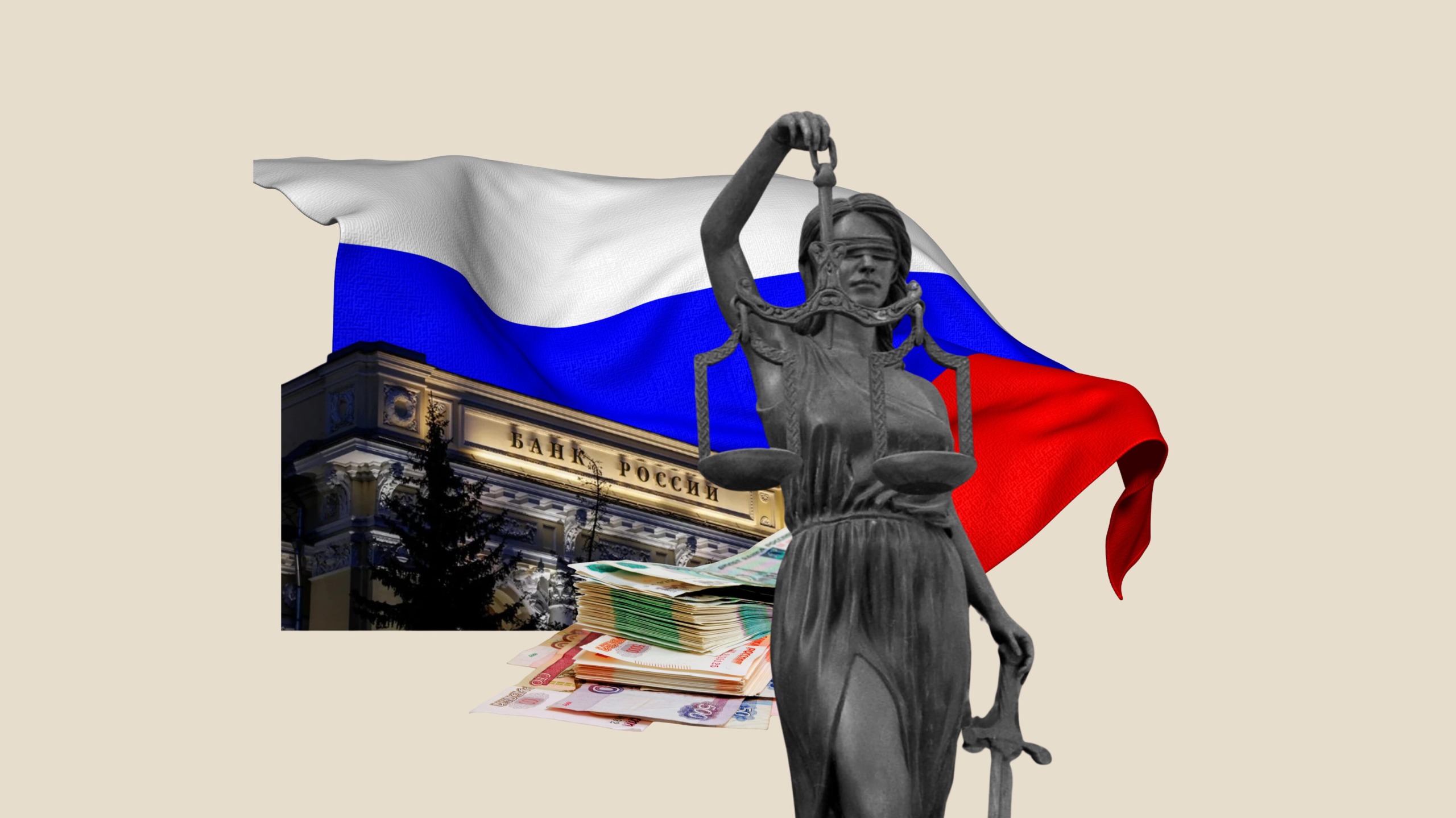
For more than three years of Russia’s full-scale aggression against Ukraine, the Western world has been living in a state of economic confrontation with Moscow. While the list of sanctions imposed on Russia is already extensive — and at times quite effective — none of the restrictive measures has sparked as intense a legal and financial debate as the question of the fate of approximately €260 billion ($300 billion) in sovereign assets of the Central Bank of Russia (CBR) frozen in Western jurisdictions.
This sum represents an exceptionally important lever in the war, as experts estimate that direct damage to Ukraine’s infrastructure and economy has already exceeded $580 billion. Against the backdrop of Russia’s ongoing financing of its war machine, the idea of using the aggressor’s assets to rebuild the victim state appears not only fair, but morally imperative.
And Kyiv remains resolute in its demands. Yevhen Choliy, Honorary Consul of Ukraine in Montreal and President of the NGO Ukraine-2050, underscores this point:
“Frozen Russian sovereign assets must be confiscated now. This is the only way to hold Russia accountable and to secure funding for Ukraine’s recovery.”
However, the decision to proceed with confiscation is far more than an act of political justice. It would establish a global legal and financial precedent — one whose implications will be felt by every central bank and every major investor worldwide.
The dilemma of sovereign immunity: two paths for the G7
The key obstacle to confiscating Russian funds lies in upholding the principle of sovereign immunity. CBR assets remain the property of the Russian Federation, and their direct seizure without an international court ruling would violate this fundamental principle, raising concerns among European lawyers and financiers. Some experts note that such a step would create “serious legal problems.”
However, international law is not static. Analysts at the European Parliament point to the potential application of the principle of “countermeasures.” Under customary international law, countermeasures are actions that would otherwise be illegal but are taken against a state that has breached fundamental norms of international law, with the aim of compelling it to halt its unlawful behavior or fulfill its obligations to provide compensation.
This concept represents a key legal loophole that could legitimize Western actions, effectively turning the confiscation of assets into a means to compel Russia to pay reparations.
Overall, the G7 countries’ approaches to transactions involving Russian assets have somewhat diverged:
- The European Union’s approach (Profits): The EU, where most of the assets are held (primarily in the Euroclear depository), has adopted a more cautious path. The European Commission has focused on utilizing the excess profits generated from reinvesting frozen assets, rather than confiscating the assets themselves. These billions of euros are being directed toward military aid and Ukraine’s reconstruction. This mechanism is considered legally safer. As European Commission President Ursula von der Leyen has repeatedly emphasized, the aggressor must pay.
- The United States’ approach (Confiscation): The US, where a smaller sum ($5–6 billion) has been frozen, has chosen a direct path. In 2024, Congress passed the REPO Act (Restoring Economic Prosperity and Opportunities for Ukrainians), which authorizes the administration to confiscate and transfer these assets to Ukraine. This step represents a direct legal challenge, setting a precedent for further, more ambitious actions. In September of this year, a bipartisan group of senators introduced a bill building on the REPO Act, which would repurpose frozen Russian sovereign assets held in the United States for transfer to Ukraine on a quarterly basis.
The Threat of “De-Dollarization” and a Symmetrical Response
The greatest financial risk restraining the EU and the ECB is not linked to Russia, but to its major trading partners. Confiscation sends a signal to the world that international reserves denominated in dollars or euros and held in the West can be seized unilaterally.
This could prompt large economies such as China, India, and Saudi Arabia to accelerate “de-dollarization” — reducing the share of Western currencies in their reserves in favor of gold or alternative financial instruments. If this trend gains widespread traction, it could undermine the global status of Western reserve currencies and destabilize the international financial system.
Reuters analysts note that the potential capital outflow from the eurozone following confiscation is one of the main reasons for the cautious stance of the European Central Bank in general, and Germany in particular.
At the same time, Moscow is openly threatening symmetrical measures. Russian Foreign Ministry spokeswoman Maria Zakharova has explicitly stated that any confiscation will elicit a “painful response”:
“We hold a significant amount of Western assets, and we will respond symmetrically.”
A symmetrical response could include the nationalization or forced seizure of assets belonging to European companies still operating in the Russian market, as was already the case with the assets of Fortum and Uniper. Overall, this represents yet another incentive for European businesses to exit Russia.
Time for Decisions
The question of confiscating Russian assets is a classic case where moral necessity must be grounded in solid legal reasoning and political will. The international community, particularly the G7 countries, must establish a robust international legal framework that clearly defines confiscation as an exceptional instrument for punishing the gravest international crime—aggression.
Only by creating such a collective legal shield can the West fairly deploy the aggressor’s funds for reconstruction while minimizing risks to its own financial system. Without decisive action, these $300 billion will remain not only a symbol of injustice but also a “time bomb” under the foundations of the global economy.