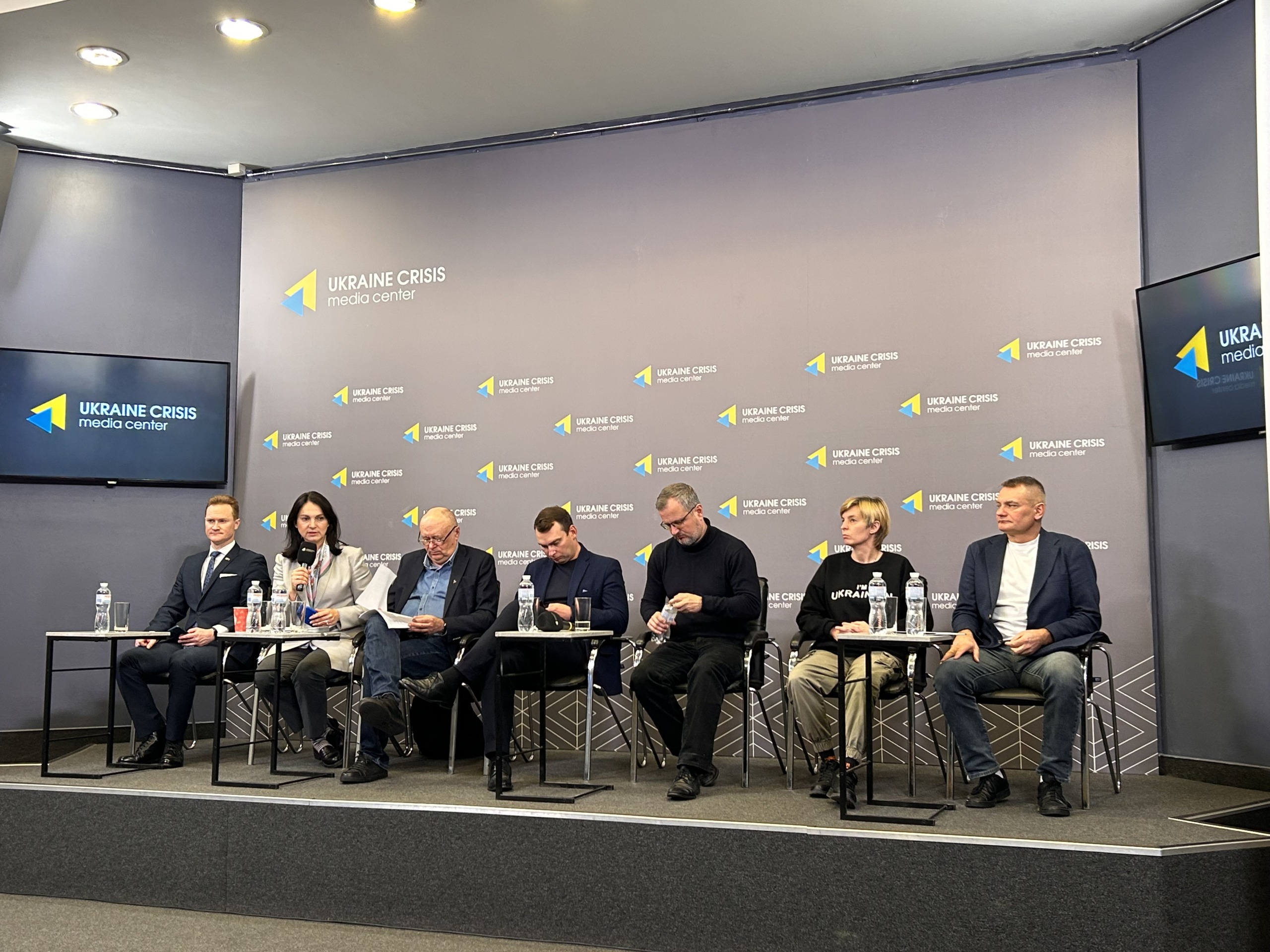
In Kyiv, during the discussion “Resilience Budget 2026: How to Direct Every Hryvnia Toward Victory,” organized by the ANTS National Interests Advocacy Network, members of parliament, economists, and civil society leaders warned that the 2026 draft budget includes a critical underfunding of the defense sector — at least 180 billion hryvnias less allocated for military salaries. The participants called on the government to stop wasteful spending and ensure that every hryvnia of the state budget contributes to victory.
Yaroslav Zheleznyak, Member of the Parliament of Ukraine:
“The 2026 draft budget allocates at least UAH 180 billion less for military salaries compared to 2025. Let me explain with a simple example. Over the past four years, most professions — whether in the public sector, business, or corporate environment — have seen salary increases of 60–70%. Yet our soldiers, who perform the most dangerous and vital work in the country, still receive a minimum of 20,000 hryvnias — with no right to resign, no possibility of transfer, and under constant threat to their lives. And instead of raising their pay, we are seeing cuts.”
Zheleznyak also emphasized that total funding for defense priorities in 2026 is UAH 300 billion less than in 2025, despite inflation, devaluation, and growing wartime needs: “UAH 3.1 trillion this year versus UAH 2.8 trillion next year — the math speaks for itself.”
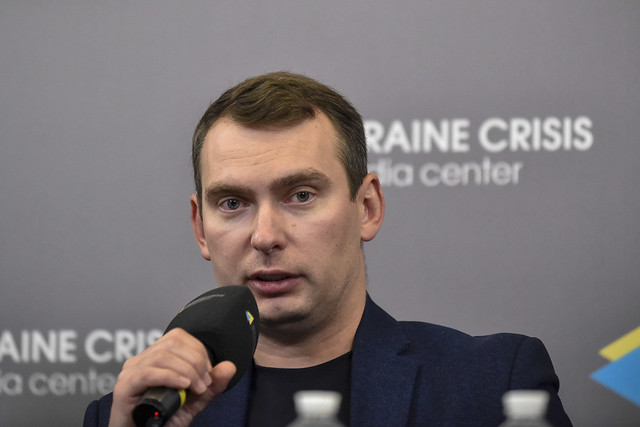
Hanna Hopko, Chair of the ANTS Board, emphasized that Ukraine has the necessary resources — what it lacks is political will and effective governance.
“The Ukrainian budget for 2026 must be entirely focused on victory. We have analyzed the state of the economy and presented an analytical report titled ‘Money for Victory’, and we can confidently say that Ukraine has the funds it needs. What is missing is effective budget management and genuine reforms to ensure the transparent and prudent use of resources. Putin will not stop on his own — only strength can stop him, and strength requires funding. That is why it is time to end wasteful spending, prioritize defense, and make sure that every hryvnia of the state budget works for our victory.”
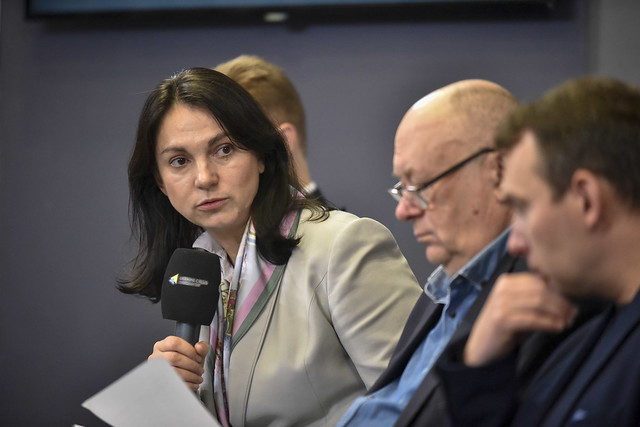
Participants also discussed the role of local communities in ensuring national resilience. Today, it is the local level that bears responsibility for supporting the army, civil protection, and providing essential services to the population.
Anatoliy Tkachuk, from the Institute for Civil Society, noted:
“During the world wars, the U.S. and U.K. budgets allocated 85–90% of their expenditures to the war effort. Ours amounts to about 60%. The rule should be simple: only what contributes to victory or strengthens the front and the rear should be financed. Everyone must pay taxes — with no exemptions or evasion. Non-essential expenditures should not be indexed. Public sector salaries should be tied to the level of military pay. Capital spending must go toward protected defense production and critical logistics.
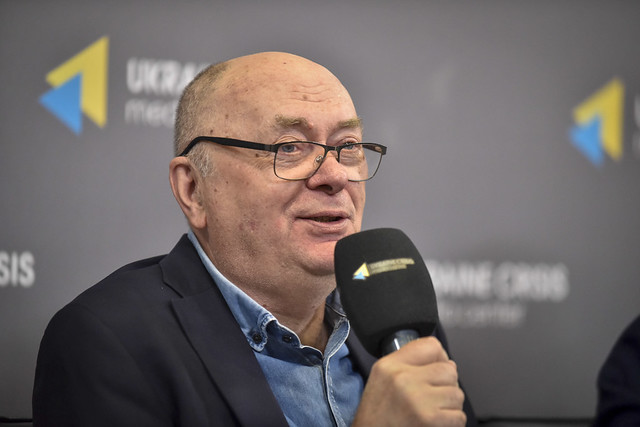
As Taras Dobrivskyi, Executive Director of the All-Ukrainian Association of of United Territorial Communities of Ukraine, noted, local communities today are effectively performing some of the functions of the state — but without adequate financial support:
“We need stable, long-term budgetary rules. Communities have been assigned atypical security responsibilities, yet their resources have been taken away. We demand that funding for the State Emergency Service and the police be restored to the local level, and that proper order be ensured in the collection of local taxes — this is a major reserve for supporting the army.”
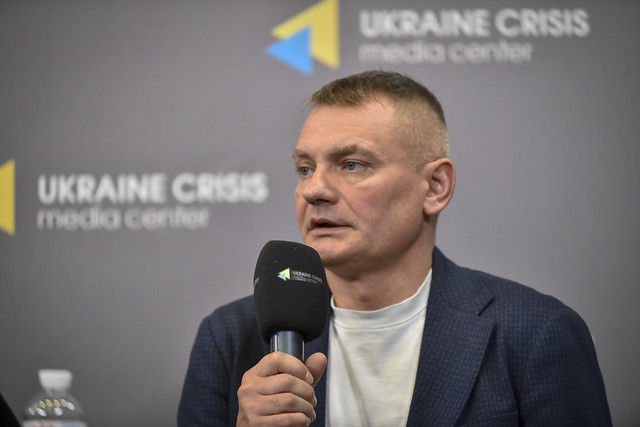
During the discussion, participants also addressed a broader understanding of the concept of “defense.” As Lyuba Shipovich, Director of the Dignitas Foundation and Co-founder of Razom for Ukraine, emphasized, without reliable infrastructure it is impossible to ensure the effective operation of the army: “Defense is not only about the Armed Forces; it is also about the infrastructure that the army moves on and protects. Roads leading to frontline agglomerations are a matter of survival. They must be built where defense decisions are made — not just for show in tourist regions.”
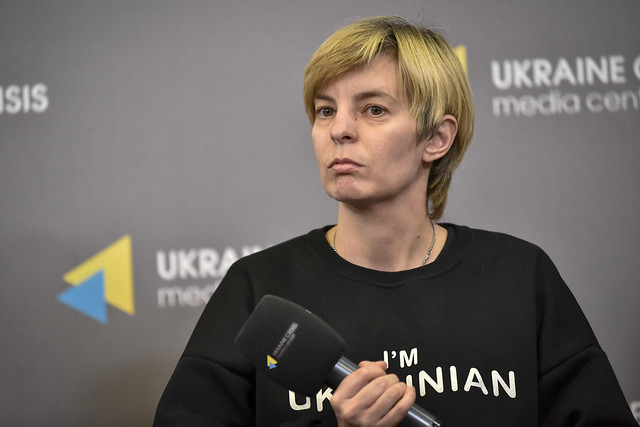
Where Is the Money That Should Be Funding the Army “Leaking” To?
The issue of fairness and efficiency in resource allocation was raised by Illia Neskhodovskyi, Head of the Analytical Department at the ANTS Network. According to him, instead of eliminating corruption schemes, the government is once again increasing the tax burden on small and medium-sized businesses and working Ukrainians. Meanwhile, the country continues to lose billions through shadow flows that could be directed toward defense:
“There is no fairness in this budget. Instead of closing corruption schemes, it strikes at SMEs and workers’ salaries. At the same time, the state is losing $2–3 billion at customs, at least UAH 25 billion from illegal tobacco, UAH 25–50 billion from the gambling sector, and suffering tax losses from e-commerce and luxury goods. This is direct money for the army that is now leaking away.”
Neshodovskyi emphasized that combating smuggling, “gray” schemes, and tax evasion is not only an economic issue but also a matter of justice during wartime. Reform of the financial system, he said, should begin with closing these loopholes before searching for new sources of budget revenue.
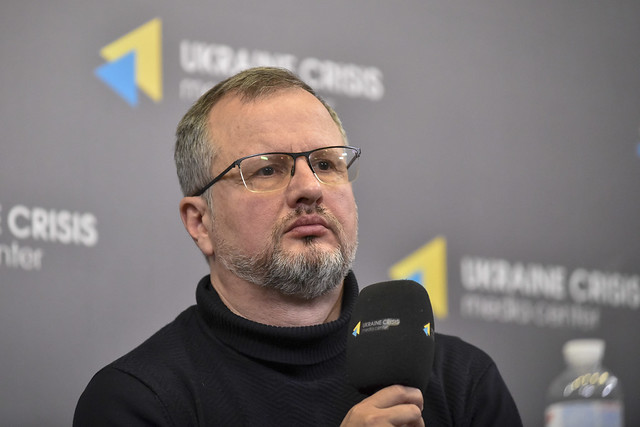
Another Concrete Source of Additional Budget Revenue — Excise Policy. Another concrete reserve for increasing budget revenues lies in excise policy, emphasized Dmytro Kupira, Program Director of the Center for Civil Representation “LIFE.” He noted that raising excise taxes on harmful products is not only a source of additional income, but also an effective mechanism for protecting the health of Ukrainians.
“Excise taxes mean both health and revenue. After a 35% increase in cigarette excise in 2025, nothing ‘terrible’ happened — revenues continue to grow. Meanwhile, tax preferences for heated tobacco products (HTPs) are already costing the budget about UAH 3 billion this year and over UAH 4 billion next year. The solutions are obvious: raise rates not by 5%, but at least to the traditional ~20%, and ratify the WHO Protocol to Eliminate Illicit Trade in Tobacco Products.”
According to Kupira, just these two steps — removing tax privileges for heated tobacco products and fully implementing the WHO Protocol — could bring additional billions in revenue to the state budget, funds that should be directed toward defense and healthcare.
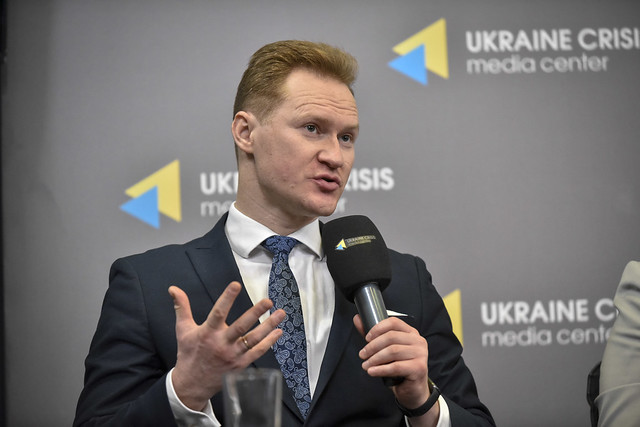
During the discussion, participants emphasized that to turn the 2026 budget into a true “Victory Budget,” action must be taken now. First and foremost, spending priorities must be reassessed. All non-critical and “showcase” projects should be frozen or canceled. Public sector salaries should be aligned with the level of military pay, while capital expenditures should be directed toward secure defense production, critical logistics, and air defense systems.
It is also necessary to mobilize domestic revenues without stifling economic growth. This includes implementing real anti-fraud and anti-smuggling controls at customs, which could generate an additional $2–3 billion annually; increasing excise taxes on tobacco and eliminating privileges for tobacco companies; introducing online monitoring of the gambling industry, which could bring an additional UAH 25–50 billion in revenue; and closing loopholes in e-commerce and small-scale imports. Another important priority is ensuring fair redistribution across different levels of government. Communities that are effectively sustaining the home front should be granted greater financial autonomy. Funding for the State Emergency Service (SES) and the National Police should be returned to the local level. It is also crucial to establish stable fiscal rules for the share of local taxes and strengthen their administration.
Another priority is the creation of a defense-industrial multiplier. The state must guarantee long-term contracts for the Ministry of Defense (for 3–5 years) to attract investors, as well as allow the export of defense products to support the development of the industry. At the international level, Ukraine must continue to work on the Reparations Loan and mechanisms for utilizing frozen Russian assets, demonstrating transparency and tangible anti-corruption progress to its partners.
This publication was prepared during the project, «Stronger Europe, United Front – Advancing Ukraine’s EU Membership for Greater Resilience and Security», was funded by the European Union. The content of this publication/video/material is the sole responsibility of the “ANTS” NGO and does not necessarily reflect the views of the European Union.