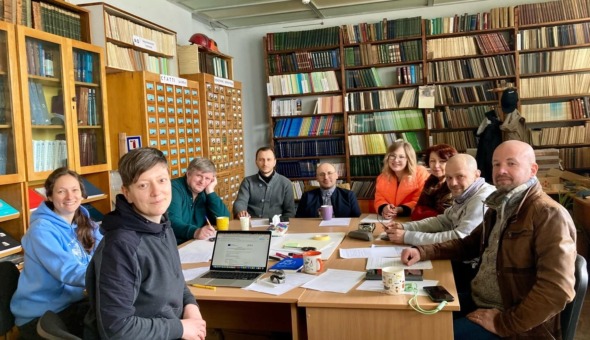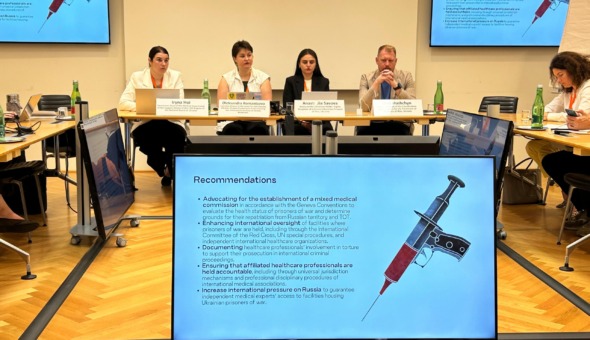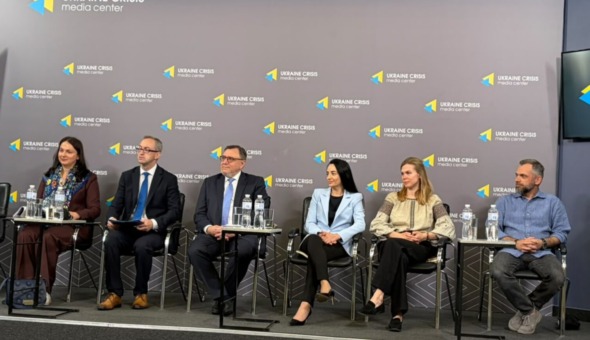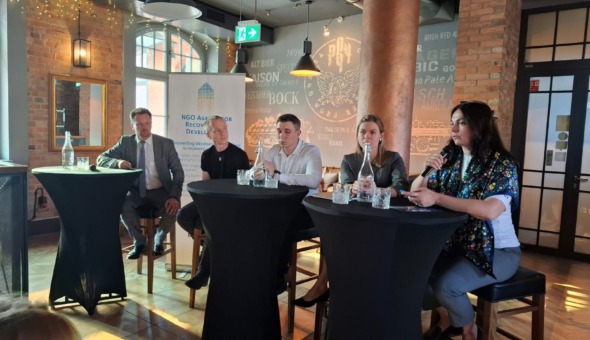
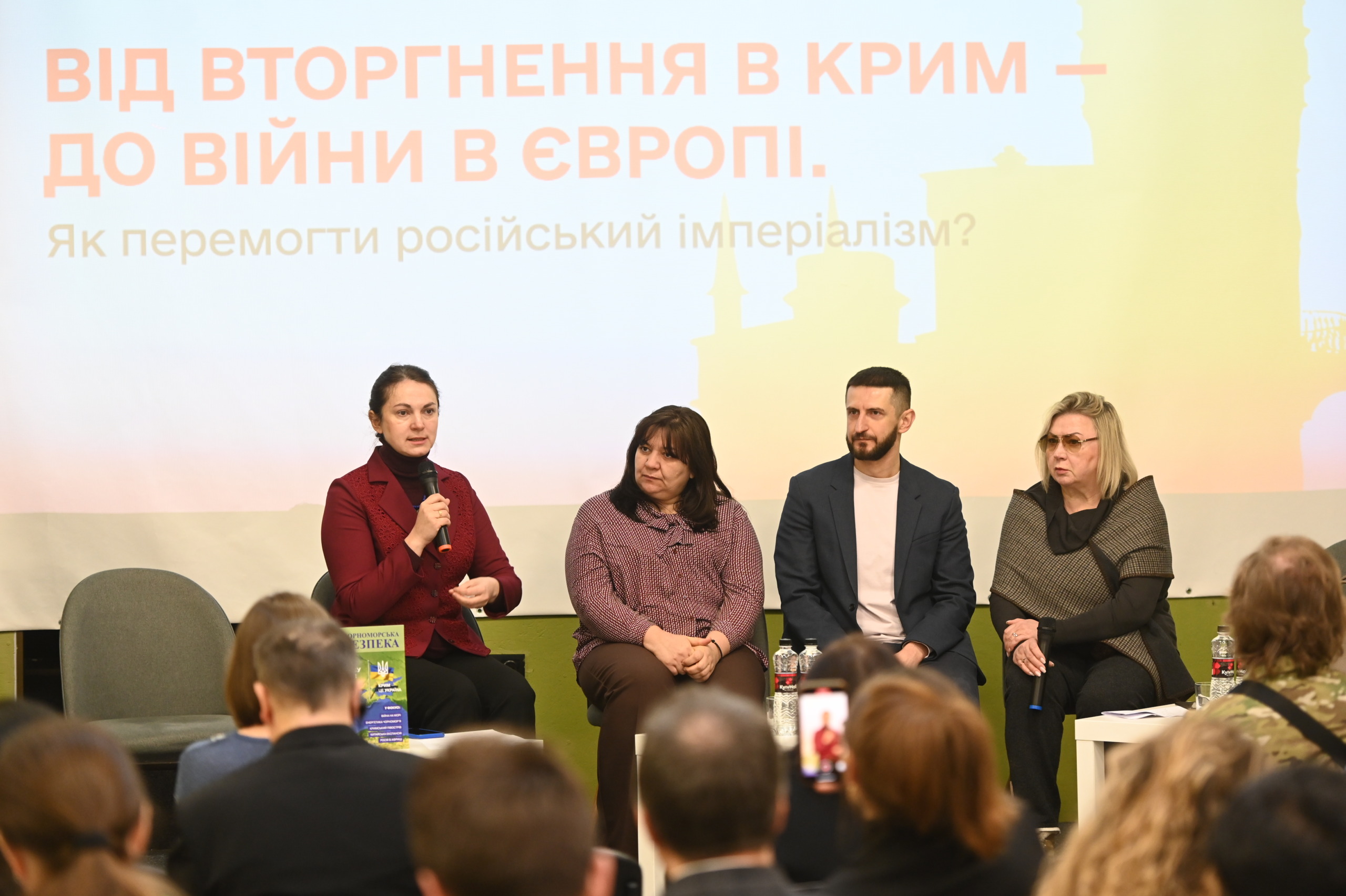
On the 12th anniversary of the start of Russia’s war against Ukraine, marked by the invasion of Crimea, the National Interests Advocacy Network ANTS, together with partners, held the forum «From the Invasion of Crimea to War in Europe: How to Defeat Russian Imperialism?» The event focused on a key challenge facing Ukraine today: shifting from a survival mindset toward a comprehensive national strategy for victory in a war that has lasted 12 years and has taken on genocidal characteristics. Prior to the forum, a memorial ceremony honored the Heavenly Hundred, participants of the Revolution of Dignity, and all those killed in Russia’s war against Ukraine in 2014–2026. A joint memorial service was held near the Ecumenical Church of the Archangel Michael and the Ukrainian New Martyrs on the Alley of the Heavenly Hundred Heroes in Kyiv, bringing together civil society representatives, experts, diplomats, and forum organizers. The service was led by Father Andrii Bodnaruk, rector of the Patriarchal Cathedral of the Ukrainian Greek Catholic Church. Participants observed a minute of silence and joined in a shared prayer as a reminder of the cost of freedom, the responsibility of the living, and the impossibility of compromise with evil. The ceremony set the moral and value-based framework for the forum, emphasizing that Russia’s war against Ukraine is not only a geopolitical conflict but a tragedy with real names, destinies, and lives for which the aggressor must be held accountable. The forum itself became a platform for an open and uncompromising discussion on the origins of the war, Russia’s responsibility for crimes against the Ukrainian people, and a strategic vision of Ukraine’s victory as a key condition for Europe’s security. Diplomats, leading experts, civil society leaders, journalists, and representatives of the veteran community took part in the discussion to answer the central question: how to stop Russian imperialism and prevent its resurgence?
During the forum «From the Invasion of Crimea to War in Europe: How to Defeat Russian Imperialism?» a key question emerged: whether the state has a clear strategy for victory in a war that has lasted 12 years and taken on genocidal features. Co-founder of ANTS Hanna Hopko stressed that responsibility for developing such a strategy cannot remain solely with civil society. In the context of a full-scale war, the state must act systematically, proactively, and with a long-term vision.
“Civil society should not be the only actor initiating discussions that define the country’s future. It is the direct responsibility of the President, the Ministry of Foreign Affairs, and state institutions to form a national negotiating team and build a strategy for victory, not merely survival. Questions of national strategy must be addressed at the highest level of government, because we are talking about the state,” — Hopko emphasized.
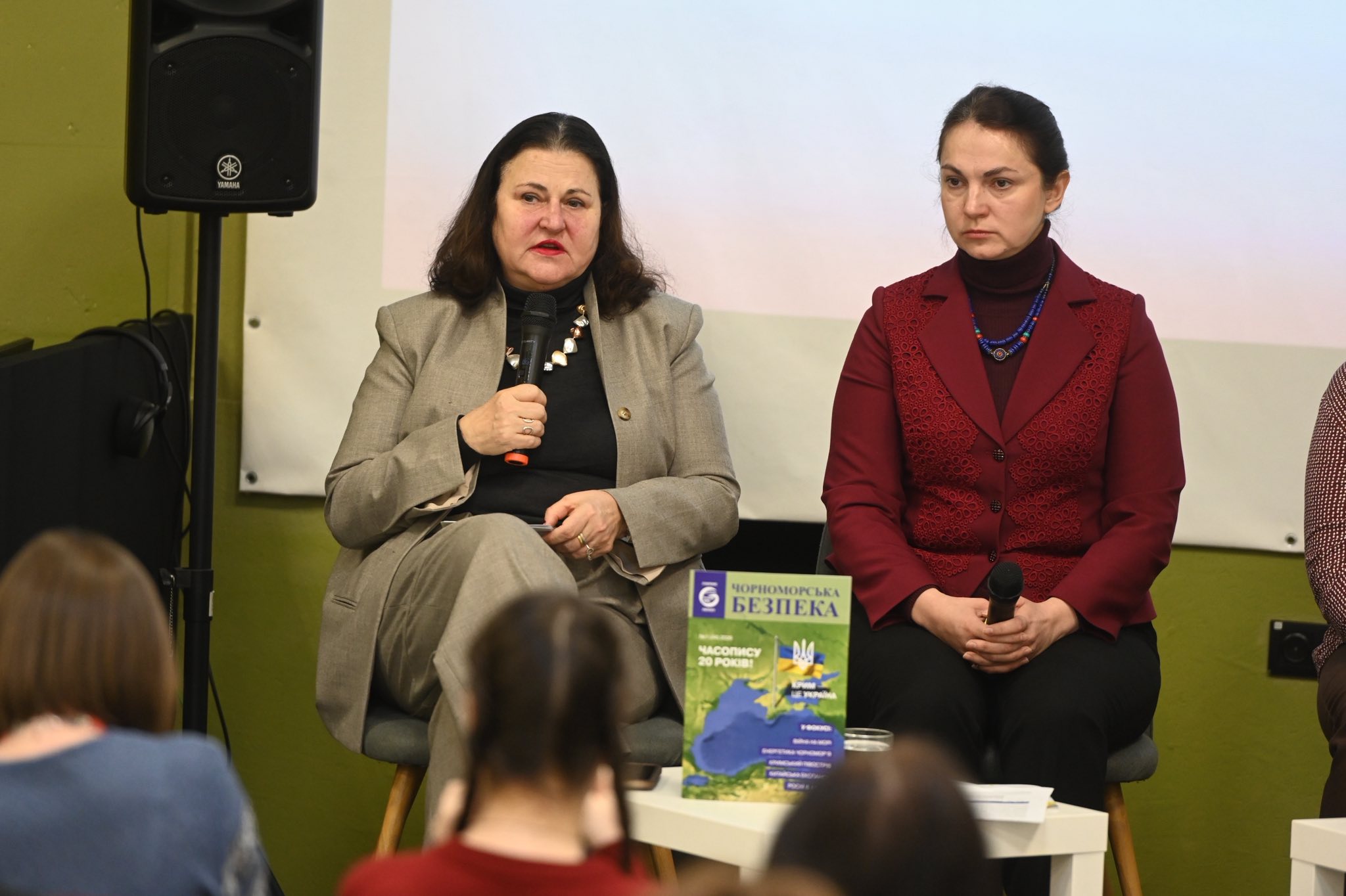
Speaking about the origins of the war and the responsibility of the international community, Ambassador of the EU to Ukraine, Katarína Mathernová, pointed to a critical mistake made at the beginning of 2014:
«Twelve years ago, when Russia attacked Crimea, the war began. But at the time, we did not fully recognize that the world should treat these events not simply as a regional threat but as the start of a large-scale war».
In her remarks, Larysa Ivshyna, editor-in-chief of the newspaper Day, drew attention to one of the key strategic mistakes in both international and domestic discourse: the gradual marginalization of Crimea in the public conversation. She emphasized that Crimea is not a peripheral episode of the war but its starting point, conceptual core, and a test of consistency in Ukraine’s state policy. According to her, forgetting Crimea creates a dangerous illusion that compromise is possible, when in reality it only postpones new stages of aggression.
«The issue of Crimea must be raised constantly. Just as the war began with Crimea, it must end with Crimea. Ukraine must consistently raise the issue of Crimea’s return. Without this, it is impossible to speak about a just peace or the end of the war».
Larysa Voloshyna, a writer and journalist, expanded the discussion beyond the Ukrainian context, describing Russia’s war against Ukraine as a civilizational confrontation. She stressed that the aggression was aimed not only at Ukraine but at the system of values on which modern Europe is built, including freedom, dignity, and the right to choose. Crimea, she said, became the first frontline of this clash, while Ukraine’s position today effectively serves as the final safeguard against further global escalation.
«This war that Russia started is, in my view, a war against the entire European civilization and everything humanity values. It began with Crimea. As long as we say ‘no’ to pacts and ‘no’ to rewarding the aggressor with foreign territories, the war has not escalated into a full-scale Third World War. Europeans still have a final safeguard, and that is us, those who say ‘no’».
Alim Aliev, Deputy Director General of the Ukrainian Institute, highlighted one of the most painful yet least discussed issues: the lack of a comprehensive state policy regarding temporarily occupied territories. He stressed that war is not only about the frontline and diplomacy but also about the state’s daily responsibility to millions of citizens living under occupation. Without a systematic vision for reintegration, statements about returning territories risk remaining declarative.
«We still do not have a central government body systematically responsible for the occupied territories. We are barely thinking about how we will reintegrate our people who remain there».
Volodymyr Viatrovych, Member of Parliament of Ukraine’s ninth convocation, emphasized the importance of correctly interpreting this war for both Ukrainian society and international audiences. Mischaracterizing the nature of the war leads to flawed decisions, compromises, and strategies. Ukraine must clearly and consistently name this conflict for what it is: a war for independence.
«Russia has a very clear goal — the destruction of Ukraine as an independent state. That is why defining this conflict as the ‘War for Ukraine’s Independence’ is an extremely accurate framework. It is the framework with which we must address the world and explain the meaning of this war».
Yan Klishaiev, known by the callsign “McGregor” and head of the All-Ukrainian association Veterans’ Corps, stressed that the decisive battle in this war is taking place not only on the battlefield but also within society. Without internal unity, shared purpose, and collective responsibility for the outcome, true victory is impossible regardless of military resources or international support.
«Victory begins in the mind. Only when we are united and working toward a shared result will victory become possible on the battlefield».
Nataliia Dyhdalovych, head of the NGO Families of the Heavenly Hundred Heroes, emphasized that Ukrainian resistance is not only a struggle for territory or political sovereignty but a deeply value-driven choice. Ukrainians, she said, have paid an extraordinarily high price for the right to remain free, and that sacrifice has positioned them as a shield between imperial aggression and the democratic world. Society’s resilience is the response to attempts to break Ukraine through fear, violence, and the devaluation of human dignity.
«Ukrainians did not kneel — and never will. We have become the buffer between an empire seeking to dominate the world and democratic values. Ukrainians want to live — but to live with dignity, not as slaves».
Andrii Mikheiev, an international lawyer at the International Centre for Ukrainian Victory, stressed that Russia’s war against Ukraine shows clear signs of genocide not only through mass civilian killings but also through the systematic destruction of the nation’s human and social potential. Crimes against Ukrainian prisoners of war, he said, represent a deliberate strategy aimed at depriving Ukraine of its future by targeting its most active, responsible, and state-building segment.
«What is happening to Ukrainian prisoners has genocidal characteristics. The Russian authorities are deliberately trying to destroy or cripple the most active, politically engaged, and economically promising part of Ukrainian society».